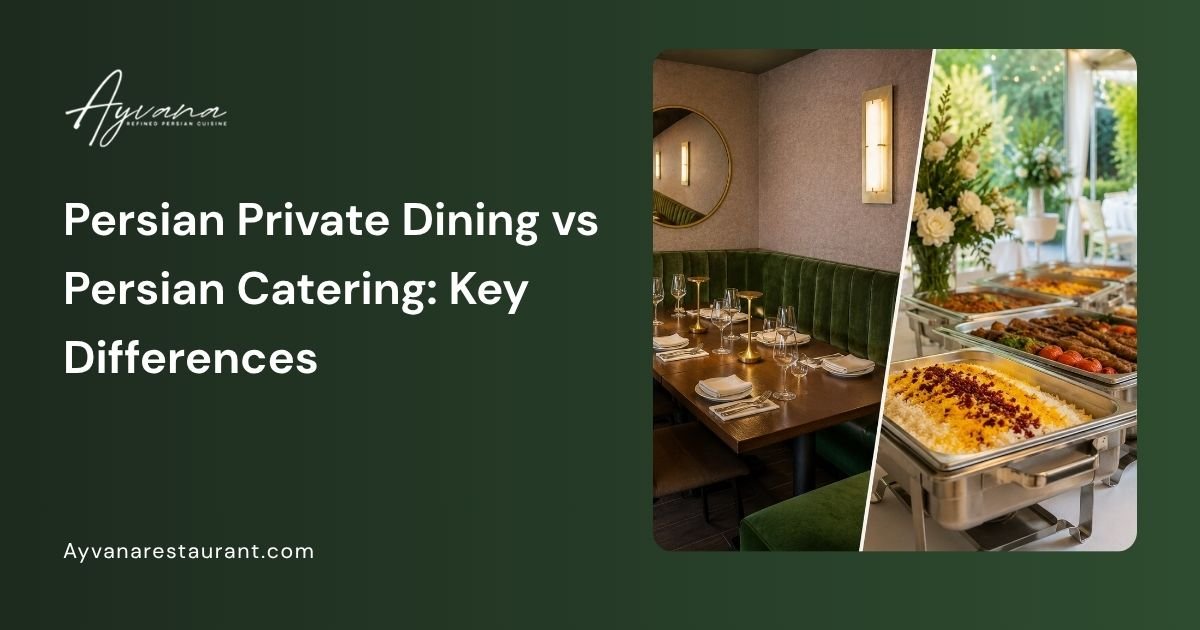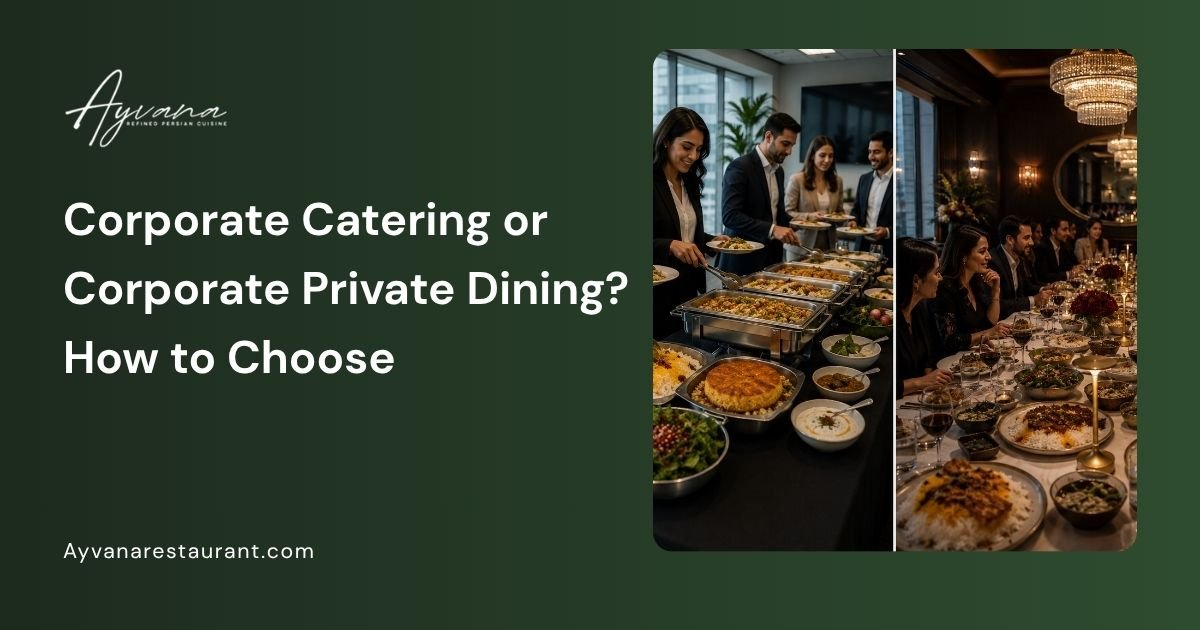
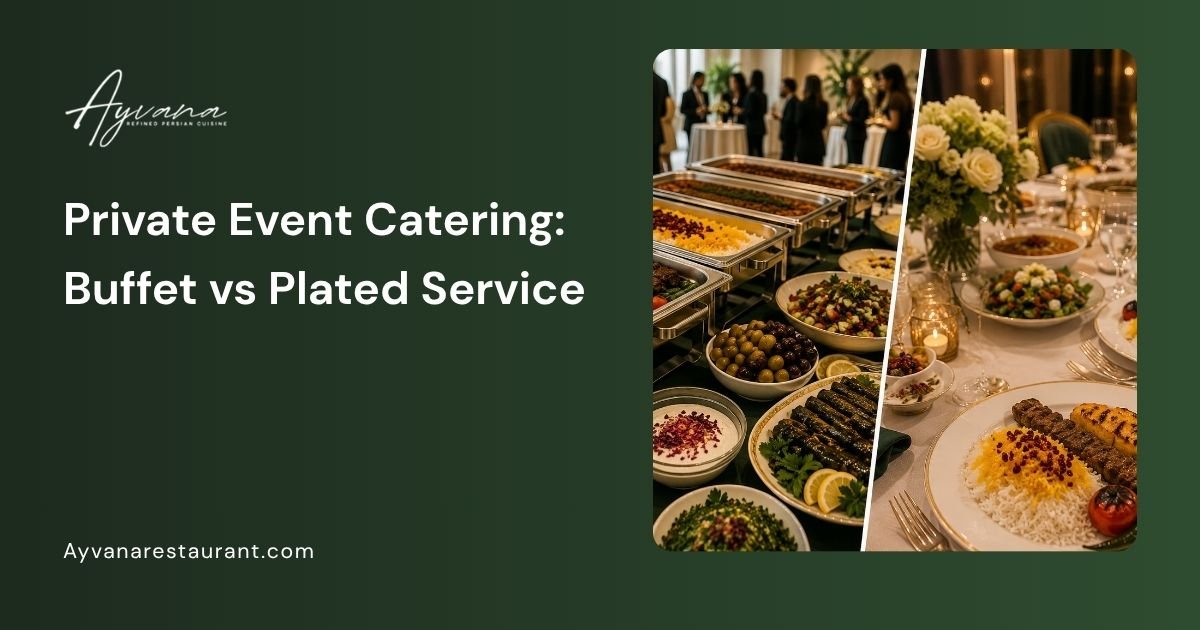
The best catering style depends on your guest count, budget, event atmosphere, and dining preferences. Buffet catering offers flexibility, variety, and guest choice, while plated catering provides a more formal dining experience with table service and structured meal timing.
Buffet catering allows guests to serve themselves from a selection of dishes, making it a popular option for weddings, birthday parties, corporate events, and family celebrations.
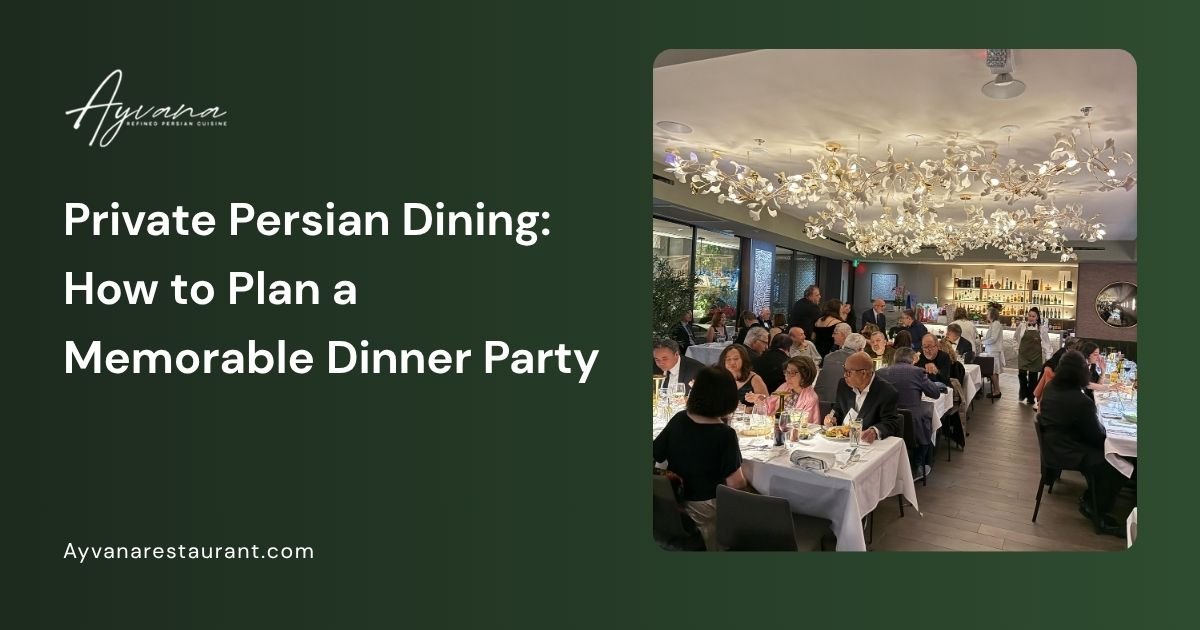
Plated catering features individually served meals delivered directly to guests at their tables, creating a more refined and coordinated experience.
Choosing the right service style can affect everything from catering costs and staffing needs to guest interaction and event flow. Ayvana Persian Restaurant offers event catering for gatherings in Tarzana and surrounding areas. Available service formats, staffing, equipment, setup, presentation, and cleanup arrangements may vary by event and venue. Hosts should confirm what is included and whether buffet, plated, hybrid, or other formats are available before finalizing their plans.
Here is the Quick Answer:
Buffet and plated catering create different private-event experiences. Buffet service generally offers greater menu variety, guest choice, and flexible dining, while plated service supports structured timing, individual presentation, and seated table service. Neither format is automatically less expensive; costs depend on the menu, staffing, equipment, setup, venue, and guest count. Persian cuisine can work in either format when the menu and service plan account for food quality, presentation, and timing. Available buffet, plated, hybrid, and other catering arrangements should be confirmed directly with the caterer.
Buffet vs Plated Catering Comparison at a Glance
Both buffet and plated catering offer distinct advantages depending on your event goals, guest preferences, and budget. The table below compares the key differences to help you quickly identify which service style may be the better fit for your private event.
Key Differences Between Buffet and Plated Catering | ||
|---|---|---|
| Factor | Buffet Catering | Plated Catering |
| Cost | Often Lower, Depending on Menu, Staffing & Setup | Often Higher When Additional Staffing & Service Are Required |
| Staffing | Staffing Needs Vary by Setup and Guest Count | Often Requires More Table-Service Staff |
| Service Speed | Guests Typically Select Food From Serving Stations | Meals or Courses Served at the Table |
| Menu Variety | Multiple Dishes and Options Available | Limited Preselected Menu Choices |
| Portion Control | Less Consistent Portions | Greater Portion Consistency |
| Formality | Can Suit Casual, Semi-Formal, or Formal Events | Often Chosen for More Formal, Structured Events |
| Guest Interaction | Encourages Socializing and Movement | Focuses on Seated Dining Experience |
| Food Presentation | Attractive Buffet Displays | Individually Plated Presentation |
| Flexibility | High Flexibility for Guest Preferences | More Structured Dining Format |
| Event Size Suitability | Can Scale Well With Sufficient Stations and Space | Can Suit Formal Events of Different Sizes With Proper Staffing |
Buffet Catering Advantages for Private Events
The following benefits explain why buffet catering remains a popular choice for private events of all sizes, particularly when flexibility, guest satisfaction, and efficient service are priorities:
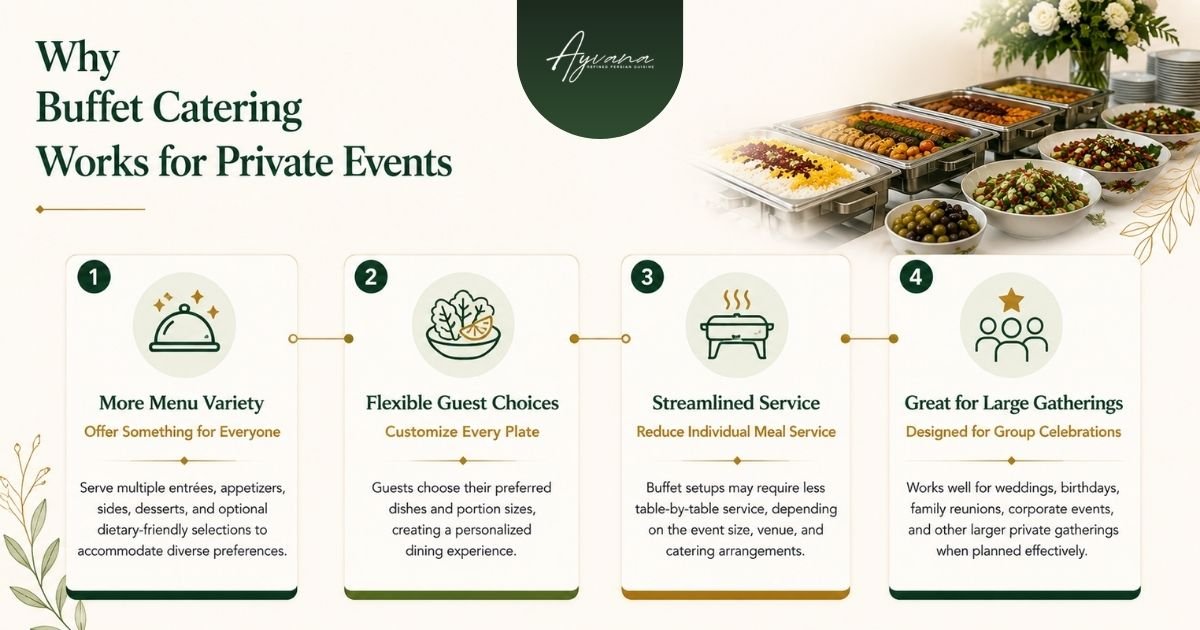
More Menu Variety for Guests
One of the biggest advantages of buffet catering is the ability to offer a broader selection of dishes in a single meal. Rather than choosing one entrée for every guest, hosts can provide multiple proteins, sides, appetizers, and desserts. This flexibility is especially valuable when guests have different dietary preferences.
Vegetarian, lighter and other dietary options may be included depending on the menu. Guests with allergies, gluten-related restrictions, or other dietary requirements should confirm ingredients and preparation practices directly with the caterer.
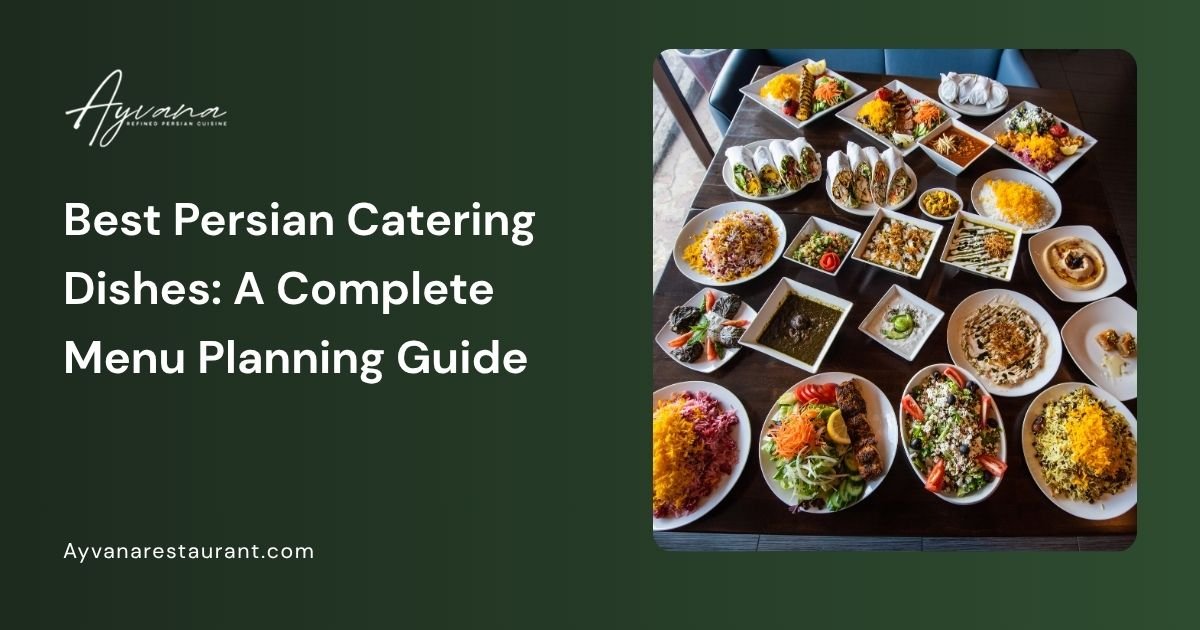
For Persian events, buffet service makes it easier to showcase the diversity of the cuisine.
Better Guest Choice and Customization
Not every guest eats the same way. Some prefer larger portions, while others enjoy sampling a variety of dishes. Buffet service gives guests the freedom to build a plate based on their own preferences rather than selecting from a limited set of pre-planned meals.
This flexibility is especially valuable at family celebrations, where children, adults, and older relatives may all have different tastes and dietary needs.
Potentially Lower Table-Service Requirements
Buffet service often requires less table-by-table service than plated catering, although total staffing needs depend on the guest count, venue, setup, and service package.
Because buffet service may involve less table-by-table staffing, it can sometimes help hosts manage event costs, depending on the setup, equipment, menu, and service package.
Ideal for Large Private Events
Buffet catering can work well for larger guest counts when the venue has sufficient space, serving points, and replenishment planning. It avoids collecting an individual meal selection from every attendee, although poorly planned stations can create lines or slow service.
For Persian celebrations, this social atmosphere often complements traditions centered around hospitality, sharing food, and bringing people together.
Buffet Catering Disadvantages to Consider
Every catering style involves trade-offs. Here are some of the most common challenges hosts should evaluate when considering buffet service for a private event:
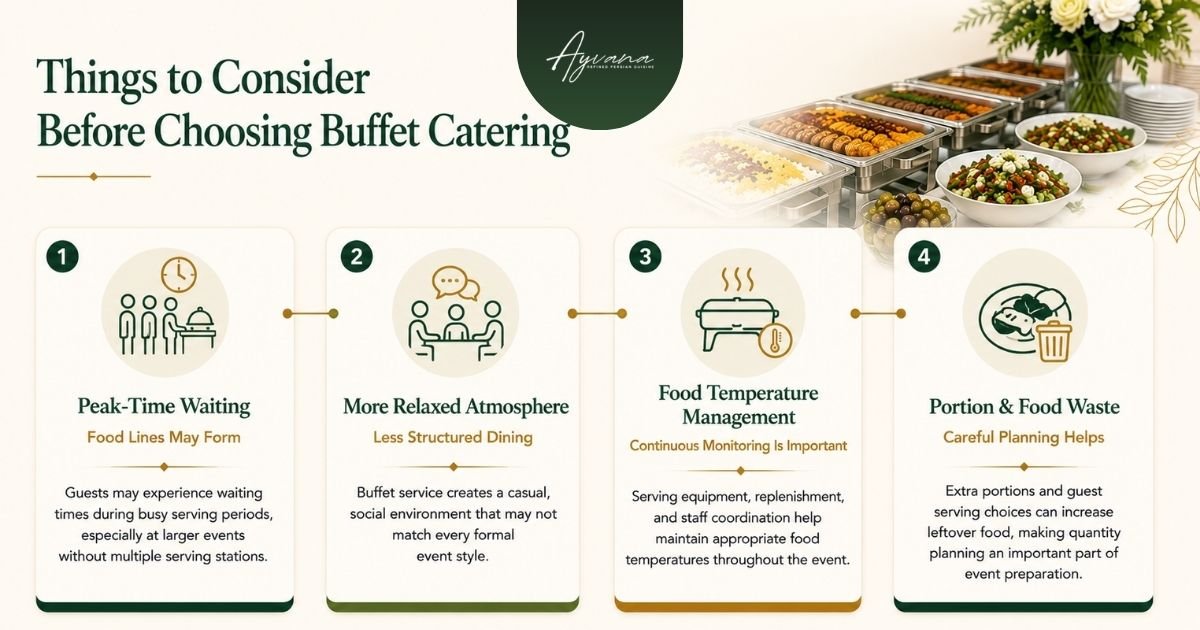
Longer Food Lines During Peak Service
One of the most common challenges with buffet catering is the possibility of lines forming when many guests visit the buffet at the same time.
During large events, guests seated later may need to wait before accessing food stations. Although experienced caterers can reduce delays through thoughtful station layouts and multiple serving points, buffet service generally requires more guest movement and waiting than a plated meal.
May Feel Less Formal
Buffet service often creates a more relaxed and social atmosphere than plated catering. Although a thoughtfully designed buffet can still suit a formal event, some hosts prefer plated service when a highly structured dining experience is part of the occasion.
Food Temperature Management Challenges
Because food remains on display throughout service, buffet catering requires careful planning to maintain safe and suitable serving temperatures. Equipment, replenishment, and monitoring responsibilities depend on the caterer, venue, and service package.
Potential Food Waste
Buffet catering can sometimes result in higher food waste compared to plated service. Guests may take larger portions than they intend to eat, while hosts often order extra food to ensure popular dishes remain available throughout the event.
This is not always a significant issue, but it is an important factor to consider when budgeting and estimating quantities for larger gatherings.
Plated Catering Advantages for Private Events
Plated catering offers several advantages for formal and upscale private events, including:
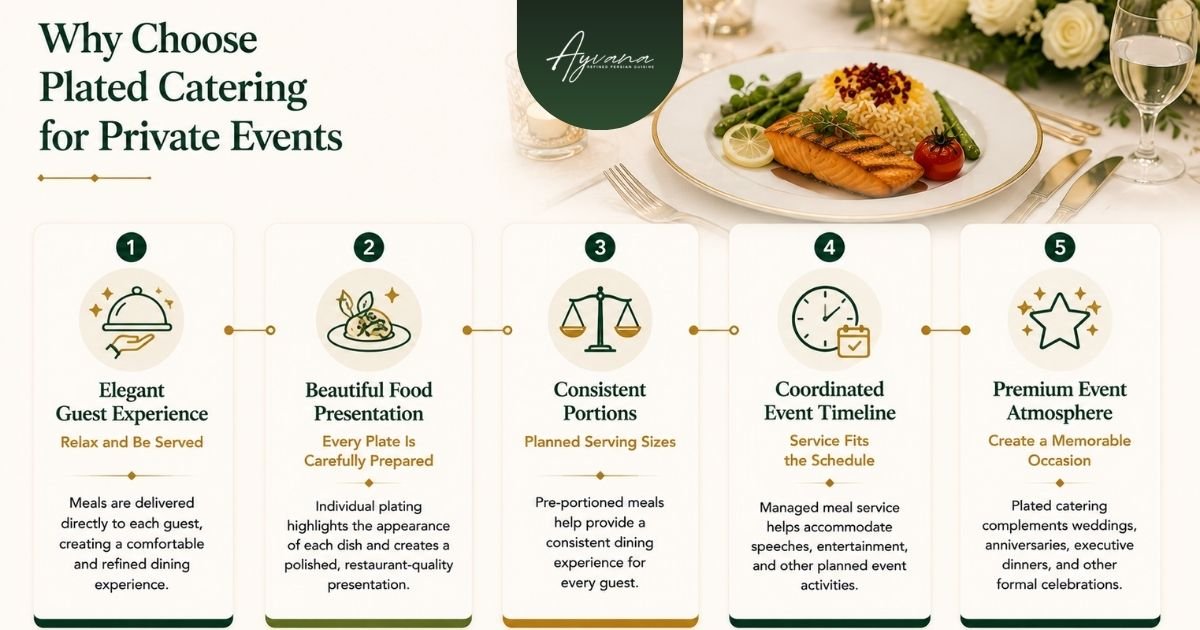
Elegant and Upscale Guest Experience
One of the primary reasons hosts choose plated catering is that it creates an elevated experience for guests. Meals are served directly to each table, allowing attendees to remain seated and enjoy the event without waiting in buffet lines.
This style of service is particularly popular for formal weddings, anniversary celebrations, and executive events.
Better Food Presentation
Plated catering allows each dish to be carefully prepared and presented before it reaches the guest. Individual plating gives chefs greater control over appearance, portion arrangement, and visual consistency.
For Persian cuisine, this can highlight the vibrant colors and presentation of dishes, creating a memorable dining experience that complements the event itself.
Improved Portion Control
With plated service, each guest receives a predetermined portion, making food quantities easier to manage and helping hosts estimate overall catering needs more accurately. This approach can reduce uncertainty around food consumption while ensuring guests receive a consistent dining experience throughout the event.
Smooth Event Scheduling and Timing
Plated meals often fit well within structured event timelines. Because service is coordinated by the catering team, hosts can more easily schedule speeches, entertainment, presentations, first dances, or other key moments around the meal.
For events with a detailed agenda, this level of coordination can help maintain a steady flow from one part of the celebration to the next.
Higher Perceived Event Value
Guests often associate plated service with fine dining, luxury events, and premium hospitality. While the quality of the food remains the most important factor, the style of service can influence how the overall experience is perceived.
For formal receptions, upscale private dinners, and special celebrations, plated catering can contribute to an atmosphere that feels intentional, exclusive, and professionally managed.
Plated Catering Disadvantages to Consider
While plated catering can create a polished and upscale dining experience, it also comes with certain limitations. Before choosing this service style, hosts should consider how it may affect budget, menu planning, staffing needs, and event logistics.
Higher Catering Costs
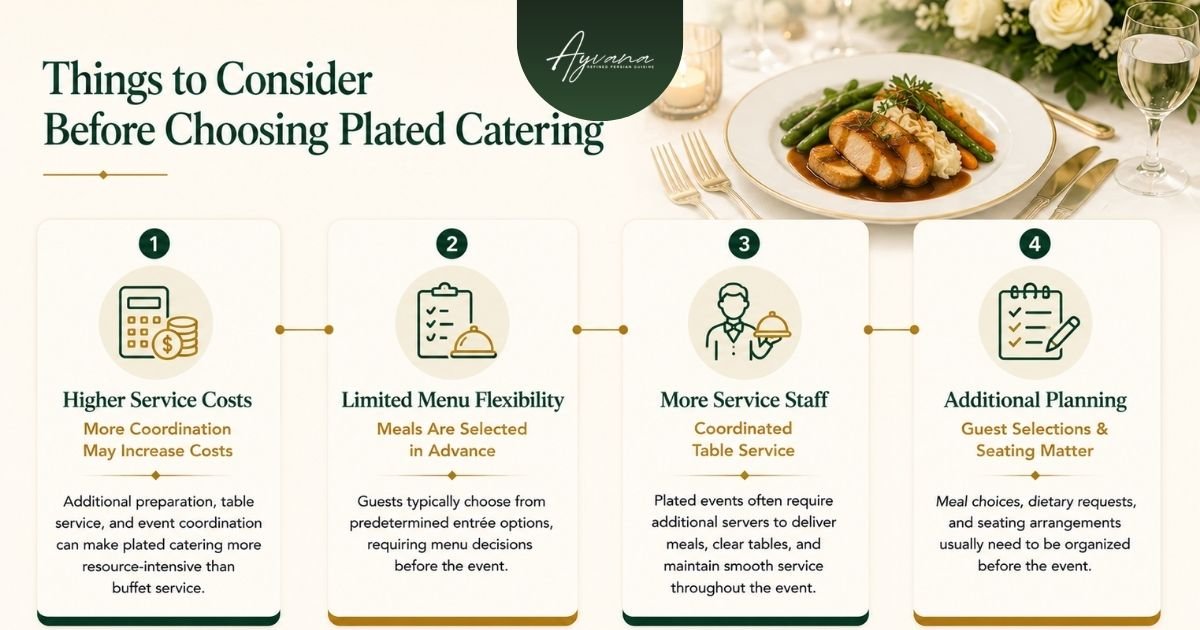
Plated catering is often more expensive when it requires additional preparation, coordination, and table-side service. For hosts working within a strict budget, these added expenses may influence the decision between plated and buffet catering.
Less Menu Flexibility
Unlike a buffet, where guests can select from multiple dishes, plated service typically limits each guest to a preselected meal choice. While hosts can offer multiple entrée options, the menu must usually be finalized in advance. This can make it more challenging to accommodate a wide range of tastes and dietary preferences without additional planning.
Requires More Service Staff
Plated service generally requires coordinated table service for meal delivery and clearing. Staffing needs depend on the guest count, number of courses, venue layout, and service arrangements, but plated events often require more table-service staff than buffet events.
More Guest Meal Coordination
Plated catering often requires hosts to collect meal selections before the event and communicate dietary restrictions to the catering team. Seating arrangements may also need to be coordinated to ensure guests receive the correct meals.
While these details help create a smooth dining experience, they can add administrative work during the planning process, particularly for weddings and large private events.
Buffet or Plated Catering? Ask These 7 Questions Before Choosing
Use these questions as a decision guide rather than treating any single answer as definitive.
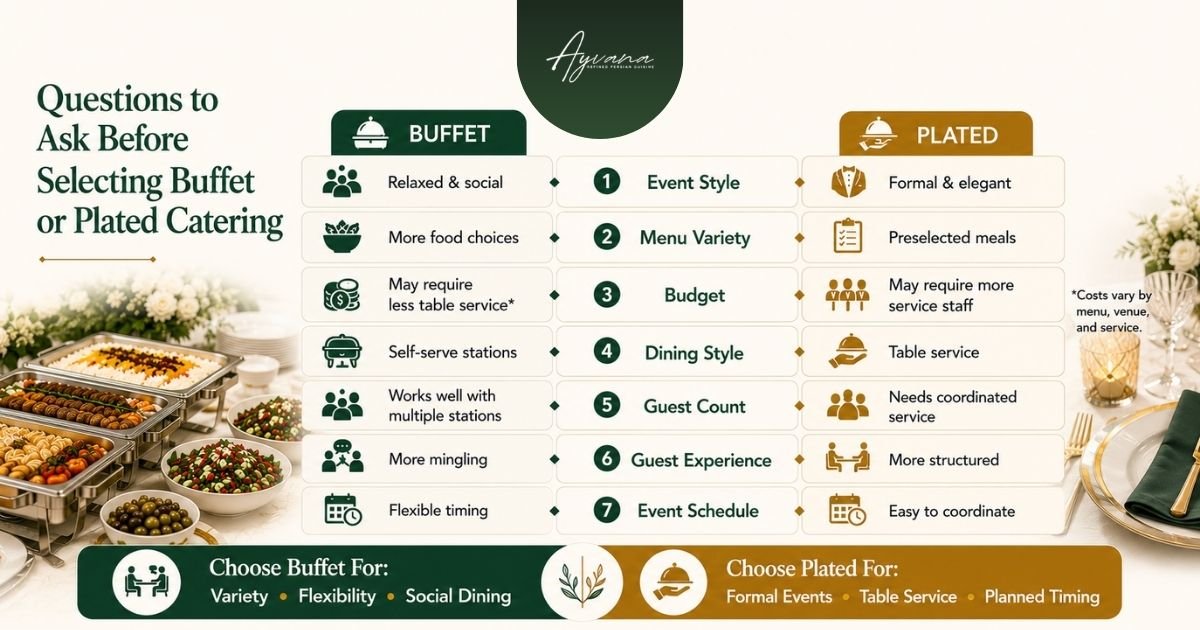
➤ Is your event formal or luxury-focused?
Plated service may better support a formal atmosphere, while buffet service can suit events where flexibility and guest movement are more important.
➤ Do you want guests to have multiple food choices?
A buffet generally allows guests to choose among more dishes and portion sizes. Plated service usually relies on a smaller number of selections confirmed in advance.
➤ Is staying within a budget a major priority?
Buffet service may reduce table-service requirements, but the final cost still depends on the menu, equipment, setup, staffing, and venue.
➤ Do you want restaurant-style table service?
Plated catering is the more natural fit when guests are expected to remain seated and receive individually served meals.
➤ Will you have a large guest count?
Both formats can work for large events. A buffet requires enough space, serving points, and replenishment planning, while plated service requires sufficient staffing and coordinated timing.
➤ Is guest interaction and socializing important?
Buffet service may encourage more movement and mingling. Plated service creates a more structured seated experience.
➤ Do you want a highly structured event schedule?
Plated service may make it easier to coordinate the meal around speeches, presentations, and entertainment. Buffet service often allows guests to dine more flexibly.
Making Your Final Decision
Choose buffet catering when menu variety, guest choice, and flexible dining are the main priorities.
Choose plated catering when formal presentation, seated service, and coordinated timing matter more.
Some events may combine service styles, subject to the arrangements available from the caterer and venue.
Buffet or Plated Catering for Weddings?
Buffet catering often suits larger or more relaxed wedding receptions where menu variety and guest choice are priorities. Plated catering may be a better fit for formal receptions where presentation, seated service, and a carefully timed schedule are central to the experience.
For Persian weddings, a buffet can showcase a broader range of kebabs, rice dishes, stews, appetizers, and sides. Plated service may work better when the couple prefers a curated menu and more structured presentation.
The decision should be based on the guest count, venue layout, formality, staffing requirements, and available service arrangements.
Buffet or Plated Catering for Birthday Parties?
Buffet catering is often practical for birthdays because it accommodates different ages, appetites, and food preferences while allowing guests to dine at their own pace.
Plated service may suit milestone birthdays or more formal dinners where the host wants a structured meal and a more refined presentation.
For most casual or family-oriented birthday celebrations, buffet service offers greater flexibility. For smaller upscale gatherings, plated service may create the more suitable experience.
Buffet or Plated Catering for Corporate Events?
Buffet catering often works well for networking events, employee gatherings, and larger company functions because guests can move around and choose from several dishes.
Plated catering may be more appropriate for executive dinners, client appreciation events, awards ceremonies, and formal corporate functions where timing and presentation require greater structure.
The right choice depends on whether the event prioritizes interaction and efficiency or a more controlled, seated dining experience.
Buffet or Plated Catering for Engagement Parties?
Buffet service can suit engagement parties where families are expected to mingle and enjoy a varied menu in a relaxed setting.
Plated service may be a better fit for formal engagement dinners with assigned seating, a curated menu, and a more structured schedule.
Because many engagement parties fall between casual and formal, the venue, guest count, and preferred atmosphere should guide the choice.
Buffet Catering vs Plated Catering for Persian Events
Persian cuisine can work well in either format because it offers a combination of grilled meats, rice dishes, stews, appetizers, and desserts that can be arranged for shared or more structured service.
Why Buffet Catering Can Suit Persian Celebrations
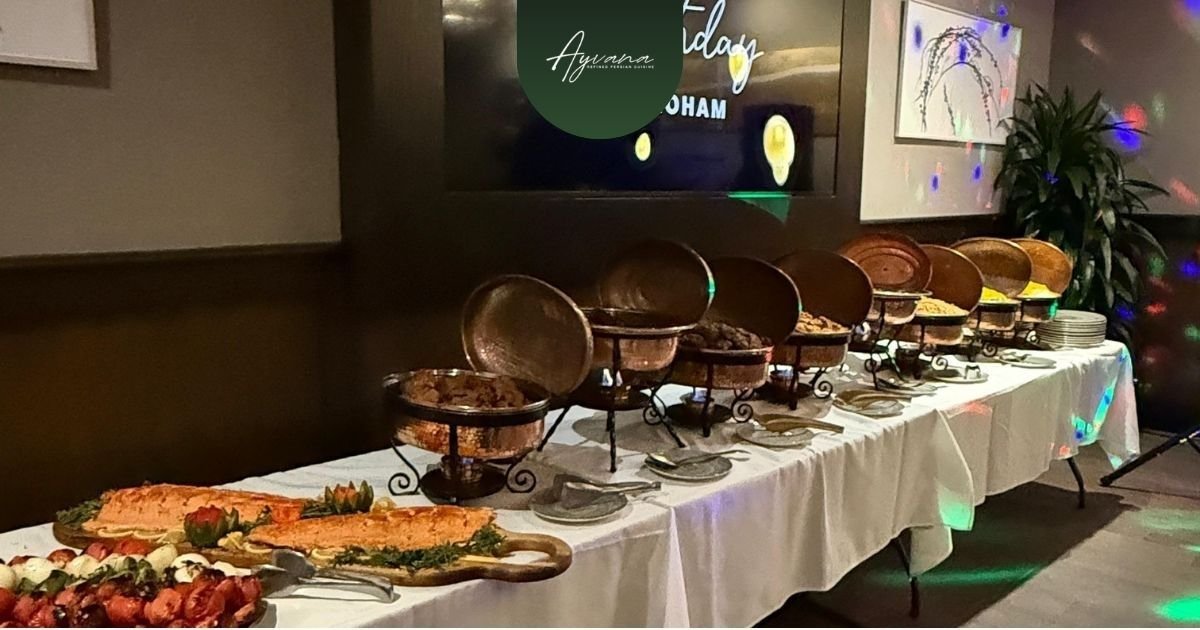
Buffet service allows guests to sample several Persian dishes during the same meal, supporting the variety and abundance often associated with Persian hospitality. Rice dishes, stews, appetizers, and selected grilled items can be arranged for group service when the venue and caterer can manage holding, replenishment, and presentation.
Why Plated Catering Can Suit Formal Persian Events
Plated service can highlight individual presentation and portion consistency, making it suitable for formal weddings, executive dinners, and upscale celebrations. Kebab entrées, saffron rice, selected stews, and desserts can be presented as composed courses when preparation and service timing are properly coordinated.
Which Persian dishes may work well for buffet service?
Stews, rice dishes, appetizers, salads, and selected kebabs may suit buffet service. The exact menu should account for serving temperature, replenishment, and texture. Tahdig, for example, requires careful presentation to help preserve its crispness.
Which Persian dishes may work well for plated service?
Kebab entrées, saffron rice, selected stews, appetizers, and desserts may suit plated service when individual presentation and consistent portions are priorities.
The specific format and dishes should be confirmed with the caterer based on the venue, guest count, and available service arrangements.
What affects buffet vs plated catering costs?
Buffet catering is not automatically cheaper than plated catering. The final cost depends on the menu, guest count, staffing, equipment, rentals, venue access, setup, cleanup, and length of service.
Buffet service may involve lower table-service costs, but equipment, food quantity, serving stations, and replenishment can increase the price. Plated service often requires more staff and coordination, although a simple plated menu may cost less than an elaborate buffet.
Hosts should request itemized quotes for both formats rather than comparing food prices alone.
How Guest Count Can Affect Buffet and Plated Catering Logistics
Guest count affects the space, staffing, service timing, and setup each format requires. The following examples show how operational considerations can change as attendance grows.
| Guest Count | Buffet Considerations | Plated Considerations |
| 25 Guests | Variety May Be Useful, But The Setup Can Be Disproportionate for a Small Group | Easier to Coordinate with a Limited Menu and Smaller Service Team |
| 50 Guests | Can Offer Good Variety If the Venue Has Sufficient Space | Still Manageable with Appropriate Staffing and Meal Selections |
| 100 Guests | Requires Careful Station Layout and Replenishment Planning | Requires Coordinated Service Timing and a Larger Team |
| 200+ Guests | Can Scale Well with Multiple Stations and Sufficient Space | Possible, But Staffing And Service Coordination Become More Complex |
Which catering style may work best for your event?
There is no single service style that works best for every event. The right choice depends on the guest count, venue, budget, menu, event schedule, and catering arrangements available.
When Buffet Catering May Be a Better Fit
Buffet service may suit larger gatherings where menu variety, guest choice, and flexible dining are priorities. It can work well for family celebrations, birthdays, engagement parties, corporate gatherings, and wedding receptions when the venue and catering provider can support the required setup.
When Plated Catering May Be a Better Fit
Plated service may suit formal weddings, executive dinners, VIP gatherings, and events with structured schedules. Because this format generally requires more coordination and table service, hosts should confirm staffing, venue and menu requirements with the caterer.
Some events may also benefit from combining service styles, but availability depends on the caterer and venue. Contact Ayvana to discuss which catering and presentation arrangements are available for your event.
Planning a Private Event? Explore Catering Arrangements With Ayvana
Ayvana Persian Restaurant offers Persian catering for weddings, engagement parties, birthdays, corporate gatherings, family celebrations, and other events in Tarzana and nearby areas. Available menus, presentation formats, delivery options, and service arrangements may vary based on the event details.
Contact Ayvana to discuss the catering options available for your guest count, venue, and celebration.