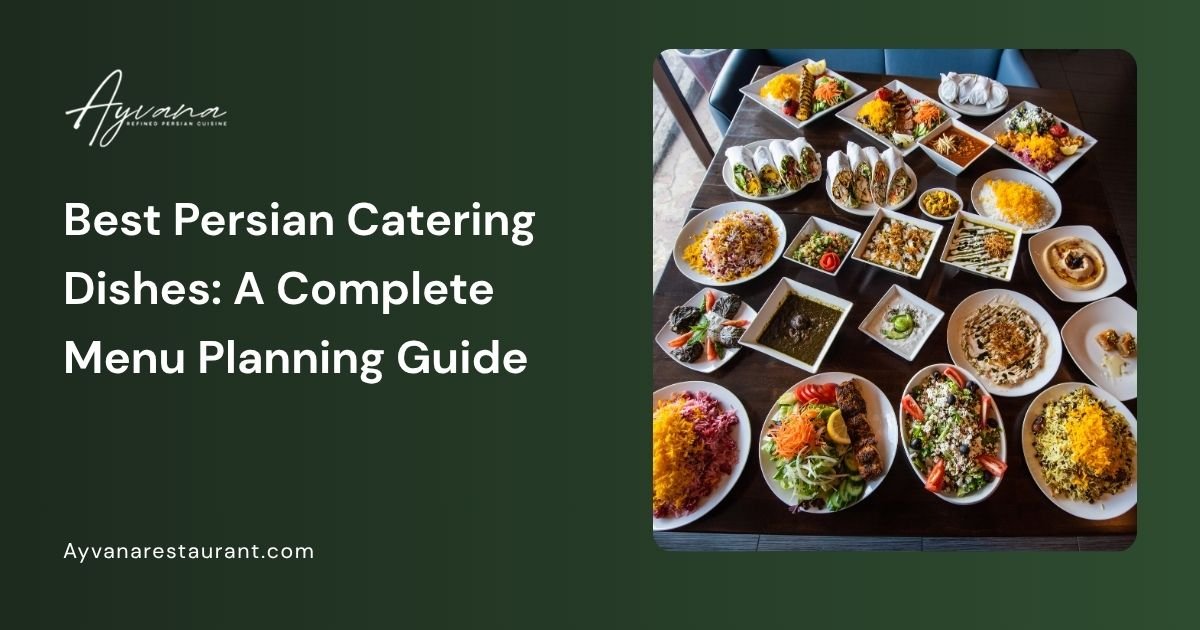
Persian catering brings together shared appetizers, grilled kebabs, saffron rice, fresh herbs, and traditional specialties to create a balanced dining experience for groups. Rooted in hospitality and generosity, Persian cuisine naturally lends itself to weddings, corporate events, family gatherings, and celebrations.
Choosing the right combination of dishes helps create variety, accommodate different preferences, and ensure guests leave satisfied. Understanding how each part of the menu works together is the foundation of successful Persian catering planning.
Here is the Quick Answer:
Persian catering menus are most successful when they balance shared appetizers, popular entrées, rice dishes, vegetarian options, and desserts. The ideal menu depends on the event type, guest count, and serving style, with buffet and family-style service both offering unique advantages. Popular selections such as koobideh kebab, chicken kabob, tahdig, zereshk polo, and fesenjan are frequently chosen for weddings, corporate events, family gatherings, and celebrations because they provide variety, flexibility, and broad guest appeal.
Why Persian Catering Is Perfect for Parties and Events
Persian catering combines variety, shareability, and hospitality in a way that works naturally for group gatherings. A well-balanced Persian catering menu can include grilled kebabs, rice dishes, appetizers, salads, vegetarian options, and desserts, giving guests a broad selection of flavors and textures to enjoy.
Shared platters and family-style traditions also help create a welcoming atmosphere, encouraging guests to gather around the table and enjoy the meal together. At the same time, buffet and family-style service options make Persian food practical for events of many sizes.
Persian catering also helps solve many of the practical challenges that come with feeding large groups. Offering multiple proteins, rice dishes, appetizers, and vegetarian options makes it easier to accommodate different tastes without requiring separate meals for each guest. Shared platters and buffet setups improve serving efficiency, while the variety of textures and flavors helps keep the menu appealing to guests who may be unfamiliar with Persian cuisine.
The result is a catering style that combines flexibility, presentation, and guest satisfaction in a way that works well for events of many sizes.
Best Persian Catering Menus for Different Events
The best Persian catering menu often depends on the type of event you’re hosting. Guest expectations, serving style, event duration, and the overall atmosphere can all influence which dishes work best. While some gatherings benefit from a broad buffet selection, others are better suited to a more curated family-style menu.
Persian Catering for Weddings
Wedding catering menus are typically larger and more diverse, offering guests a wide selection of appetizers, entrées, rice dishes, and desserts. Premium options such as Soltani, Barg, lamb shank, and saffron rice are common choices, while buffet service often helps maintain a smooth flow throughout the event. For many weddings, presentation and menu variety are just as important as the food itself.
Persian Catering for Corporate Events
Corporate catering often prioritizes efficiency, flexibility, and broad guest appeal. Mixed kebab platters, rice dishes, salads, and vegetarian options can accommodate different dietary preferences while remaining easy to serve and enjoy. A balanced menu helps keep the dining experience professional without feeling overly formal.
Persian Catering for Birthday Parties and Graduation Celebrations
Birthday parties and graduation celebrations often benefit from casual, shareable menus that encourage guests to sample a variety of dishes. Appetizer platters, koobideh kebab, chicken kebab, rice dishes, and family-style sides are popular choices because they create a relaxed atmosphere while offering something for different tastes and age groups.
Persian Catering for Family Gatherings and Holiday Events
Family gatherings and holiday celebrations are often centered around comfort, tradition, and spending time together. Menus frequently feature family-style service with classic dishes such as ghormeh sabzi, fesenjan, lamb shank, saffron rice, and shared appetizers. The emphasis is usually on abundance, variety, and creating a welcoming experience that encourages guests to gather around the table and enjoy the meal together.
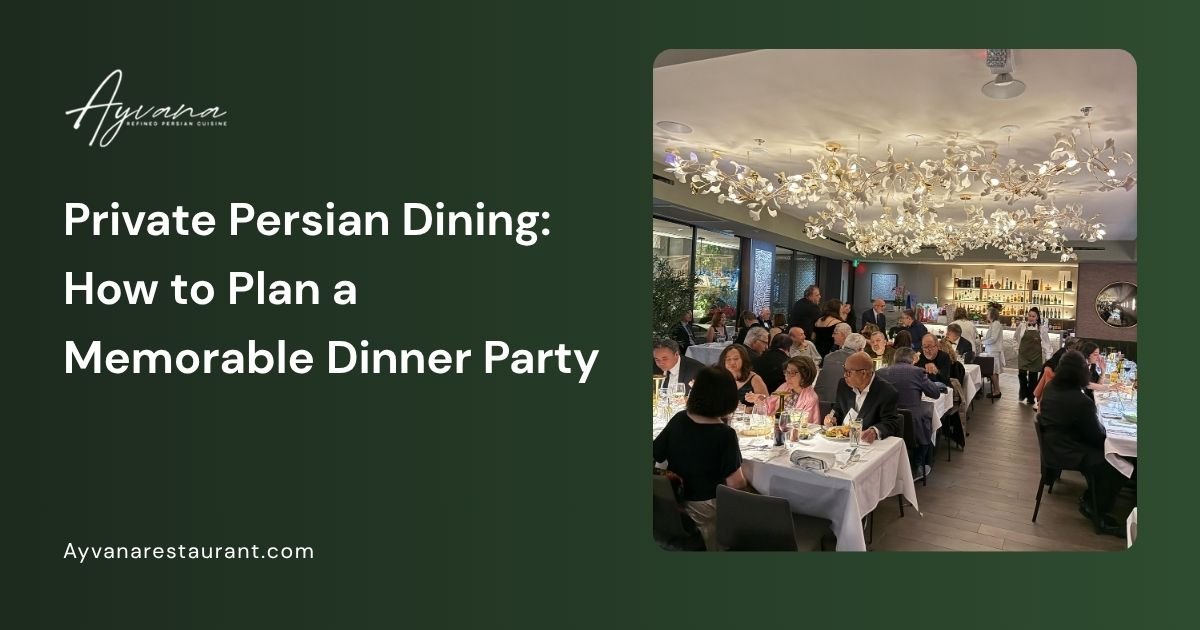
Persian Catering for Private Dinner Parties
Private dinner parties often focus on a carefully curated menu rather than a large selection of dishes. Family-style hospitality, thoughtfully paired courses, and traditional Persian specialties can help create a more intimate dining experience where conversation and shared dining remain central to the evening.
How to Build the Perfect Persian Catering Menu
A well-balanced Persian catering menu combines a variety of flavors, textures, and serving styles. The goal is to create a meal that feels abundant and welcoming while giving guests several options to enjoy.
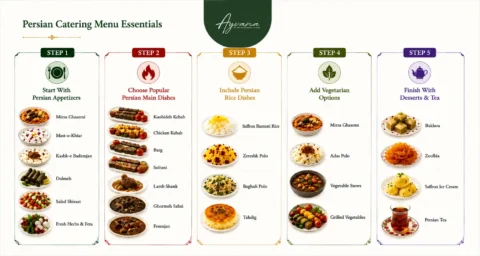
Start With Persian Appetizers
Appetizers help set the tone for the meal and encourage guests to share and sample different flavors. A combination of creamy, fresh, and savory starters creates variety before the main course arrives.
Popular Persian catering appetizers include:
- Mirza Ghasemi – A smoky eggplant and tomato dish that adds depth of flavor and works well as a shareable starter.
- Mast-o-Khiar – Yogurt mixed with cucumber and herbs, offering a cool and refreshing contrast to grilled dishes.
- Kashk-e Bademjan – Roasted eggplant topped with kashk, mint, and sautéed onions.
- Dolmeh – Grape leaves stuffed with a flavorful rice mixture.
- Salad Shirazi – A fresh salad made with diced cucumber, tomato, and onion.
- Fresh Herbs and Feta – A traditional Persian accompaniment that adds freshness and balance to the table.
Choose Popular Persian Main Dishes
The main course is often the centerpiece of a Persian catering menu. For large groups, many hosts choose a mix of grilled meats and traditional specialties to provide variety.
Popular choices include:
- Koobideh Kebab – Seasoned ground beef kebabs are one of the most requested catering items.
- Chicken Kabob – Marinated chicken grilled over an open flame and widely enjoyed by guests of all ages.
- Barg – Tender filet mignon kebab with a rich, traditional flavor.
- Soltani – A combination of koobideh and barg for guests who want the best of both.
- Lamb Shank – Slow-cooked and served with rice for a hearty entrée.
- Ghormeh Sabzi – A classic herb stew featuring beans and tender meat.
- Fesenjan – A rich stew made with walnuts and pomegranate sauce.
Koobideh, chicken kabob, and Soltani are often among the easiest options for catering and large-group service, while traditional stews add variety and depth to the menu.
Include Persian Rice Dishes
Rice is a central part of Persian cuisine and serves as the foundation for many catering menus. Different rice dishes help complement proteins, stews, and appetizers while adding color and variety to the table.
Common options include:
- Saffron Basmati Rice – A classic pairing for nearly any Persian entrée.
- Zereshk Polo – Rice topped with barberries and saffron, commonly paired with chicken dishes.
- Baghali Polo – Rice prepared with dill and fava beans, often served with lamb.
- Tahdig – The crispy golden rice layer that many guests look forward to most.
Offering more than one rice option can create a more balanced and visually appealing catering spread.
Learn More: Different Persian Rice Dishes
Add Vegetarian Persian Catering Options
Including vegetarian dishes helps accommodate different dietary preferences while adding additional flavors and textures to the menu.
Popular options include:
- Mirza Ghasemi – Smoked eggplant blended with tomatoes and garlic.
- Adas Polo – Rice prepared with lentils and warm spices.
- Vegetable Stews – Traditional Persian stews centered around vegetables and legumes.
- Grilled Vegetables – A simple side that pairs well with many main dishes.
Finish With Persian Desserts and Tea
Desserts and tea are an important part of Persian hospitality and often help extend the dining experience after the main meal.
Popular choices are:
- Baklava – Layered pastry with nuts and sweet syrup.
- Zoolbia – A traditional Persian fried pastry often enjoyed during celebrations.
- Saffron Ice Cream – A classic dessert flavored with saffron and rosewater.
- Persian Tea – Traditionally served after meals and paired with sweets.
Learn More: 10 Traditional Persian Desserts
How Much Persian Food Should You Order?
One of the most common catering questions is how much food to order. The answer depends on your guest count, serving style, and menu selection, but Persian catering traditionally emphasizes generosity and abundance, so menus are often designed to ensure guests have plenty of options.
For smaller gatherings, hosts often focus on a few appetizers, one or two main dishes, and a rice selection. Larger events usually benefit from greater variety rather than simply increasing portions of a single entrée. Offering multiple proteins, at least one vegetarian option, and more than one rice dish helps guests build balanced plates while reducing the risk of menu fatigue. This approach reflects traditional Persian hospitality, where abundance is often expressed through variety rather than excess.
Once you’ve established the overall menu structure, consider the following factors when finalizing quantities:
- Guest count: Larger groups typically benefit from a wider variety of dishes rather than larger quantities of a single item.
- Appetizer-to-main balance: A menu with several appetizers may require fewer main-course portions per guest.
- Buffet service: Guests often enjoy sampling multiple dishes, so offering a variety of proteins, rice dishes, and sides can work well.
- Dietary preferences: Including vegetarian options helps ensure all guests have suitable choices.
- Leftovers: Many hosts intentionally plan for some leftovers, especially for family gatherings and celebrations.
A balanced Persian catering menu often includes shared appetizers, two or more main dishes, at least one rice dish, and a dessert or tea service.
Planning portions around variety rather than a single entrée can help create a more satisfying experience for guests while reflecting the welcoming spirit of Persian hospitality.
Buffet Style vs Family-Style Persian Catering
Both buffet and family-style service work well with Persian cuisine. The right choice often depends on your event size, venue, and the type of dining experience you want to create.
Benefits of Buffet Service
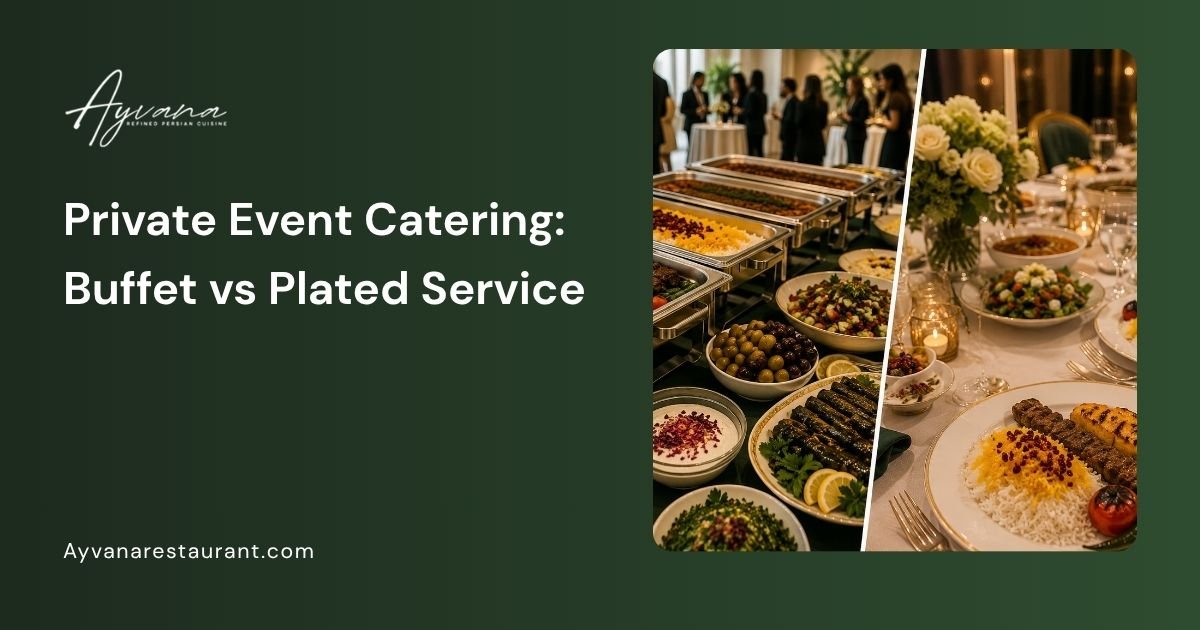
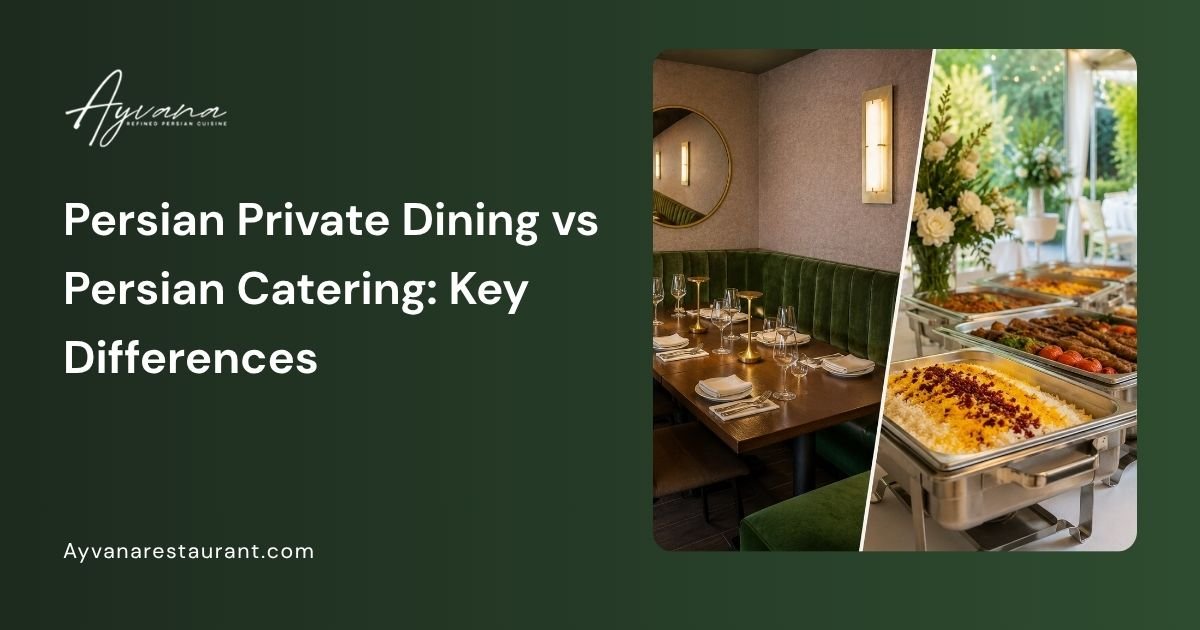
Buffet-style catering gives guests the flexibility to choose their preferred dishes and portion sizes. It also helps maintain efficient traffic flow at larger events while allowing a wider variety of appetizers, entrées, rice dishes, and sides to be offered in a single setup.
Benefits of Family-Style Service
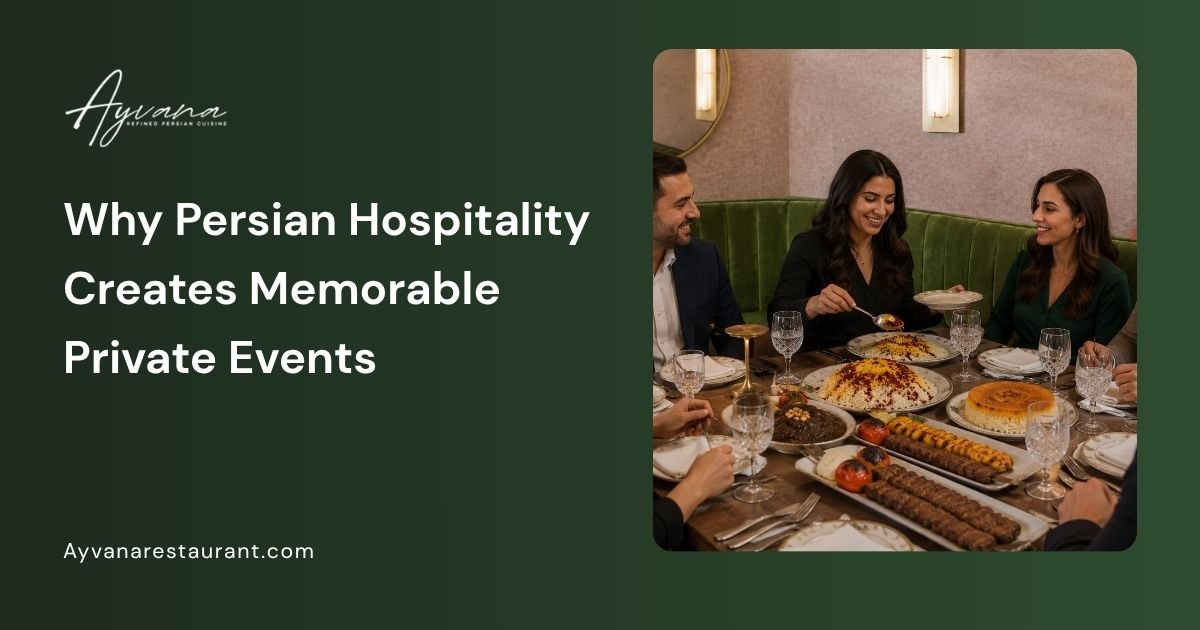
Family-style service reflects traditional Persian hospitality, with large platters placed at the table for guests to share. This approach encourages conversation, creates a more communal dining experience, and allows guests to enjoy a variety of dishes together.
Which style works best for your event?
Buffet service is often a practical choice for weddings, corporate functions, and larger celebrations where guest movement and menu variety are priorities.
Family-style dining may be better suited for private gatherings, dinner parties, and family events where interaction and shared dining are central to the experience.
When deciding between the two, consider your guest count, venue layout, event formality, and how long guests will be dining. Both styles can showcase Persian cuisine beautifully when matched to the occasion.
Most Popular Persian Catering Dishes Guests Love
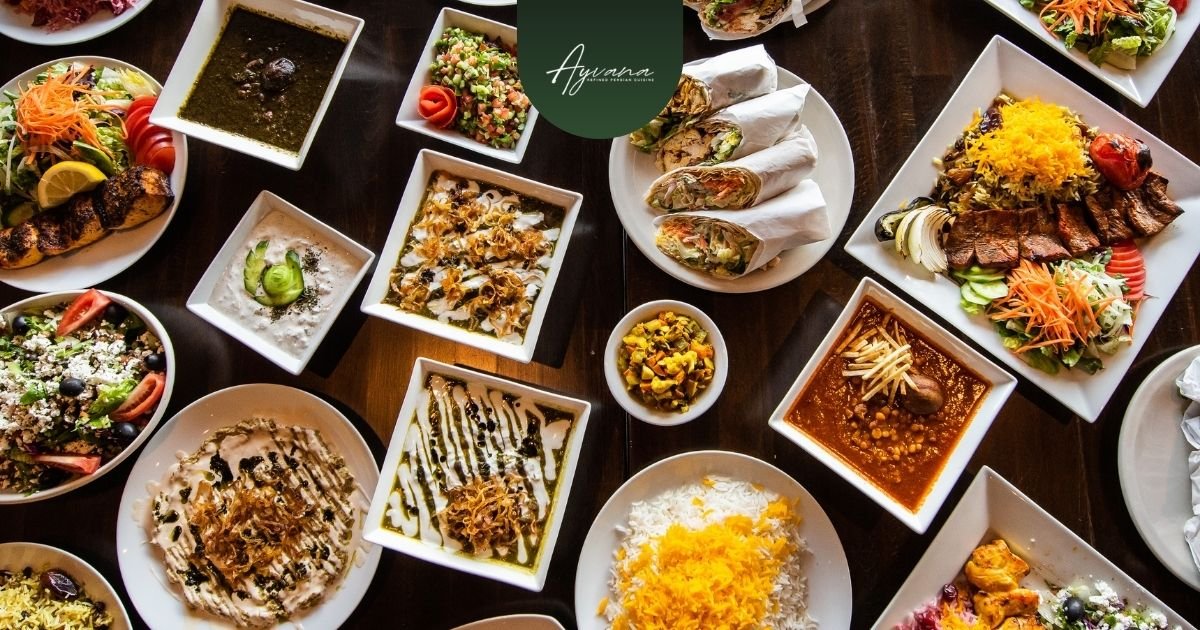
Some Persian dishes consistently stand out at catered events because they offer a balance of flavor, presentation, and broad guest appeal.
Koobideh Kebab remains one of the most requested catering selections thanks to its versatility and ability to pair well with a variety of rice dishes and sides. Tahdig is another favorite, adding a distinctive texture that many guests look forward to during the meal.
Zereshk Polo is often appreciated for its colorful presentation and balanced flavor profile, while Chicken Kabob continues to be a popular choice for large gatherings because it appeals to a wide range of tastes. Fesenjan is frequently included to add variety and provide guests with a traditional Persian specialty alongside grilled entrées.
Together, these dishes help create a catering menu that feels diverse, satisfying, and representative of Persian cuisine.
Common Mistakes to Avoid When Ordering Persian Catering
Avoiding a few common mistakes can make a significant difference in guest satisfaction and event flow.
- Ordering too few appetizers – Appetizers help welcome guests and provide variety before the main meal. Including a selection of shared starters can create a more complete catering experience.
- Choosing only heavy entrées – A menu made up entirely of rich or heavy dishes may feel repetitive. Balancing grilled meats with fresh salads, appetizers, herbs, and lighter sides can create better variety.
- Forgetting vegetarian guests – Including vegetarian options helps accommodate different dietary preferences and ensures all guests have multiple dishes to enjoy.
- Skipping rice variety – Rice is a central part of Persian cuisine. Offering more than one rice option can add visual appeal and provide better pairings for different entrées.
- Underestimating portions – Ordering too little food can leave guests with limited choices. Planning portions carefully and accounting for guest count helps ensure a comfortable dining experience.
- Waiting until the last minute to order – Advance planning often provides more flexibility when selecting dishes, coordinating portions, and accommodating special requests, especially for larger events.
How Persian Hospitality Shapes Catering Experiences
Persian catering is rooted in hospitality, with an emphasis on welcoming guests through generous portions, shared meals, and thoughtful presentation. Rather than focusing on a single dish, menus often include a variety of appetizers, entrées, rice dishes, and sides that encourage guests to sample and share.
Beautifully arranged platters, colorful rice dishes, and fresh accompaniments help create a warm and inviting atmosphere. These traditions make Persian catering about more than serving food. They help bring people together around the table.
Tips for Serving Persian Catering Beautifully
Presentation is an important part of the Persian dining experience. A thoughtfully arranged catering setup can enhance both the visual appeal of the food and the overall atmosphere of the event. Here are a few ways to present Persian catering beautifully:
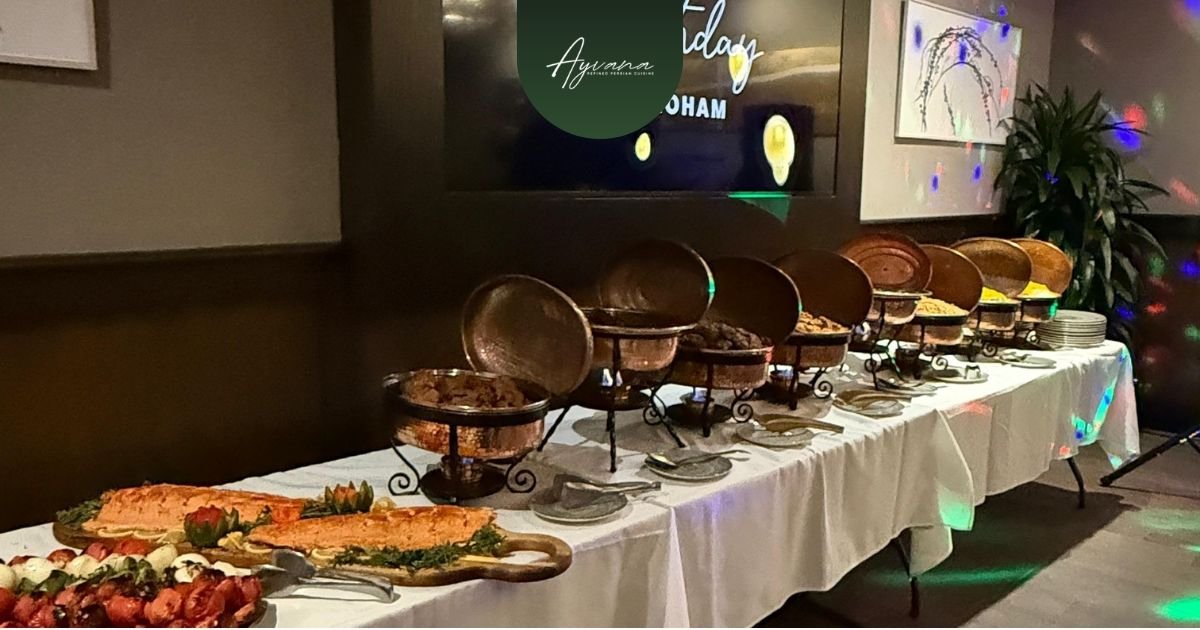
- Use copper serving trays or decorative platters for a traditional presentation.
- Garnish dishes with saffron, barberries, fresh herbs, or citrus slices for added color.
- Include fresh herbs and feta platters throughout the buffet or dining tables.
- Display rice dishes prominently to showcase their color and texture.
- Arrange buffet stations in a logical flow from appetizers to desserts.
- Separate vegetarian dishes and clearly label menu items when possible.
- Create height and visual interest using risers or varied serving pieces.
- Set up a Persian tea station with tea, sugar cubes, and traditional sweets.
- Keep serving areas organized and replenished throughout the event.
- Use matching serving ware for a cohesive and polished appearance.
Why Ayvana Persian Restaurant Is a Trusted Persian Caterer in Tarzana
Planning a successful catered event often requires more than selecting dishes. Menu coordination, presentation, portion planning, and guest preferences all play an important role in creating a smooth dining experience.
At Ayvana Persian Restaurant, catering menus are built around authentic Persian cuisine and can be customized to suit different event sizes, serving styles, and dietary needs. From corporate lunches and family gatherings to weddings and private celebrations, the goal is to create a menu that feels balanced, welcoming, and appropriate for the occasion.
Attention to presentation, experience serving large groups, and a focus on traditional Persian hospitality help ensure that each catering order is thoughtfully prepared. Conveniently located in Tarzana, Ayvana serves hosts looking for authentic Persian catering throughout the local community and surrounding areas.
For larger events, planning ahead, discussing menu options early, and reserving in advance can help create a more seamless catering experience.
Conclusion
A well-planned Persian catering menu balances appetizers, entrées, rice dishes, desserts, and dietary accommodations to create a dining experience that feels welcoming and satisfying for guests. Matching your menu to the event type and guest preferences can help create a smoother and more enjoyable gathering.
Rooted in hospitality and shared dining traditions, Persian catering brings people together through variety, presentation, and memorable meals. For weddings, corporate events, family gatherings, and private celebrations, planning ahead often leads to the best results.
If you’re planning an upcoming event in Tarzana, contact Ayvana Persian Restaurant to explore catering menu options tailored to your gathering.