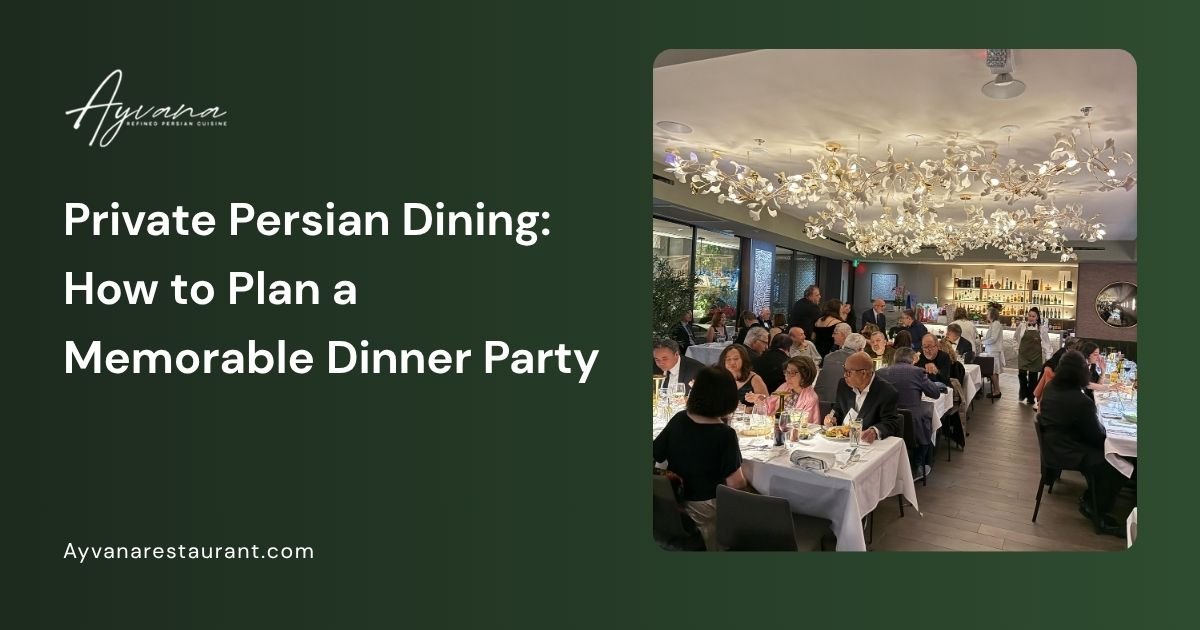
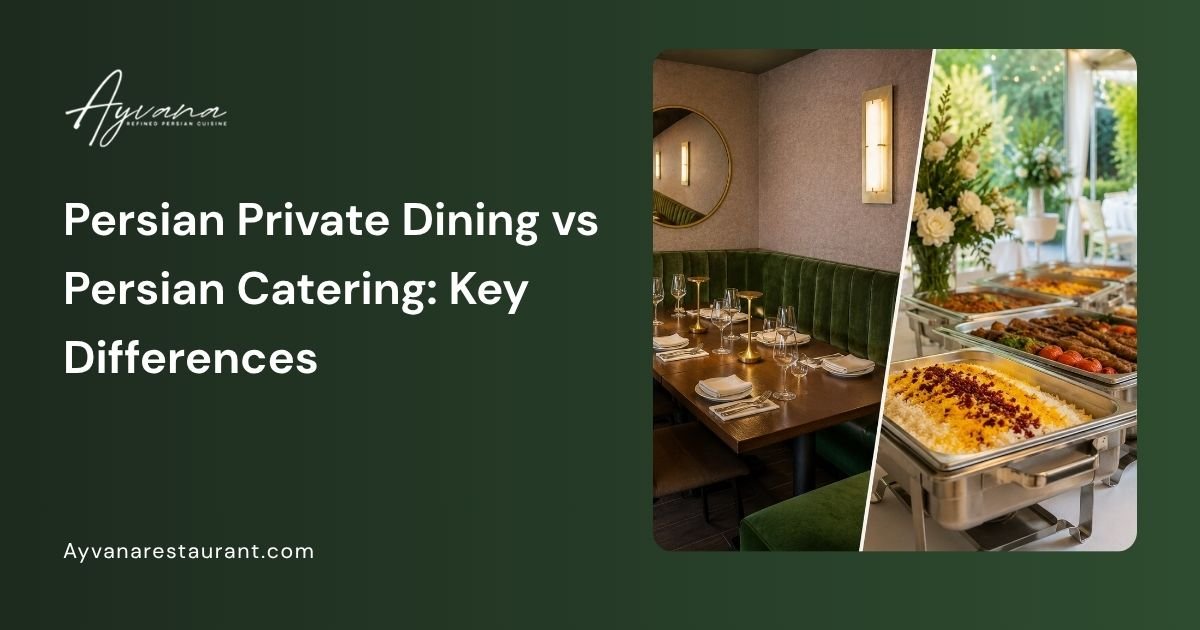
Choosing between private dining and catering is about more than deciding where food will be served. The choice affects the atmosphere, level of service, guest interaction, and overall experience of your event.
When comparing Persian private dining vs Persian catering, both options offer authentic Persian cuisine and hospitality, but they serve different purposes. Private dining creates a dedicated restaurant experience with on-site service, while catering brings the food and hospitality directly to your chosen venue.
From birthdays and family gatherings to weddings and corporate events in Tarzana, the right choice often depends on the size of the event, the setting, and the type of experience you want your guests to enjoy.
Here is the Quick Answer:
Private dining and catering both offer authentic Persian cuisine and hospitality, but they create different event experiences. Private dining is often ideal for smaller gatherings that benefit from a dedicated restaurant atmosphere and on-site service, while catering provides the flexibility needed for larger events and off-site venues. Factors such as guest count, budget, service expectations, venue availability, and event goals can help determine the best fit. At Ayvana Persian Restaurant, guests can choose from private dining for up to 50 people or Persian catering services tailored to business events, weddings, birthdays, family gatherings, and other celebrations throughout Tarzana.
Persian Private Dining vs Persian Catering Comparison Table
Choosing between private dining and catering often comes down to the type of experience you want to create. While both options offer authentic Persian cuisine, they differ in areas such as service, atmosphere, flexibility, and event logistics.
The table below highlights the key differences to help you compare both options at a glance.
How Private Dining and Catering Compare | ||
|---|---|---|
| Factor | Persian Private Dining | Persian Catering |
| Cost | Includes Venue, Service, and Dining Experience | Varies Based on Guest Count, Setup, Staffing, and Venue Requirements |
| Convenience | Restaurant Handles Setup, Service, and Cleanup | Food Is Brought to Your Chosen Location, With Service Depending on the Arrangement |
| Guest Capacity | Suitable for Smaller Gatherings and Groups Within the Restaurant’s Capacity | Well-Suited for Large Events and Celebrations |
| Service Level | Restaurant Service and a Hosted Dining Experience | Delivery, Pickup, Shared Platters, or Other Available Catering Arrangements |
| Ambiance | Built-In Restaurant Atmosphere and Décor | Depends on the Venue and Event Setup |
| Food Presentation | Restaurant-Style, Shared, or More Structured Menu Arrangements | Shared Platters, Catering Trays, or Other Available Presentation Formats |
| Event Planning | Less Coordination Required From the Host | May Require Additional Venue and Logistics Planning |
| Flexibility | Fixed Restaurant Location and Schedule | Greater Flexibility in Location, Layout, and Event Format |
| Privacy | Private or Semi-Private Dining Options, Depending on Availability and Group Size | Privacy Depends on the Venue and Event Setup |
| Hospitality Experience | Immersive Persian Hospitality and Guest Service | Persian Hospitality Delivered to Your Preferred Location |
What is Persian private dining vs Persian catering?
While both options are designed to support memorable gatherings, they differ in several key areas. Below, we’ll explain how private dining and catering compare in terms of venue, service style, guest experience, and event logistics.
Persian Private Dining
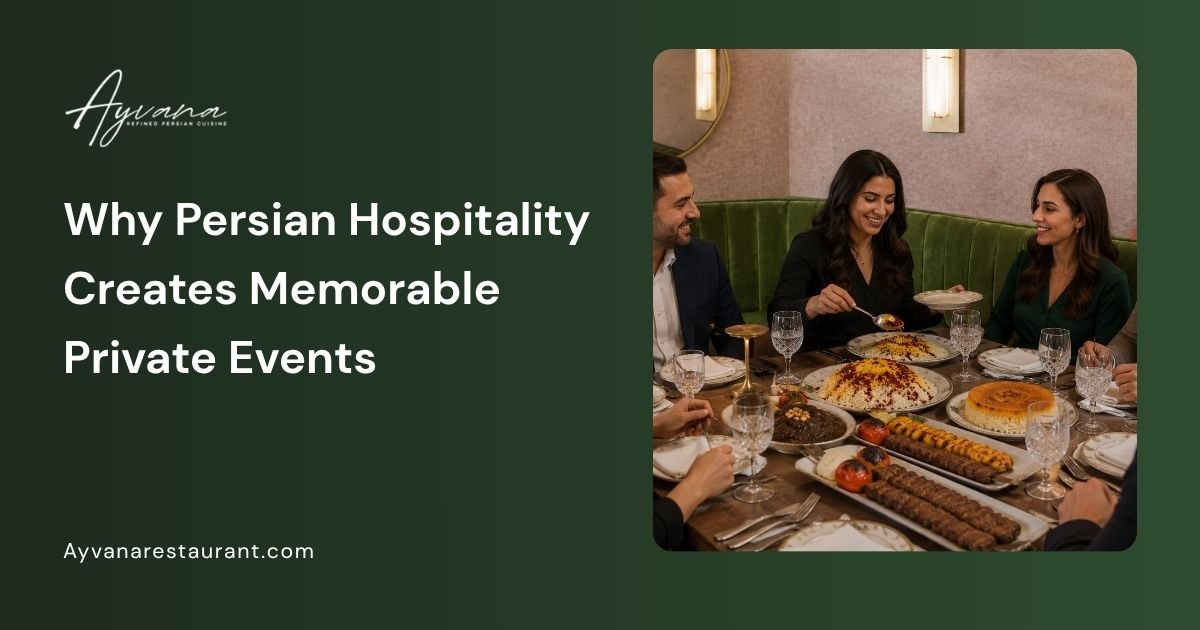
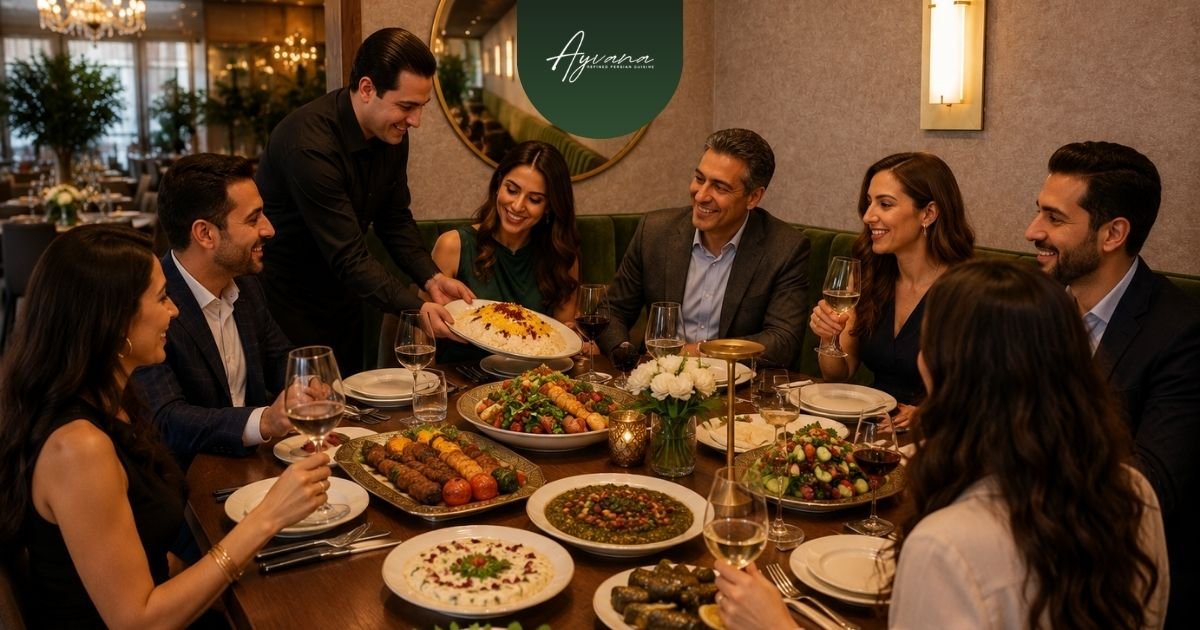
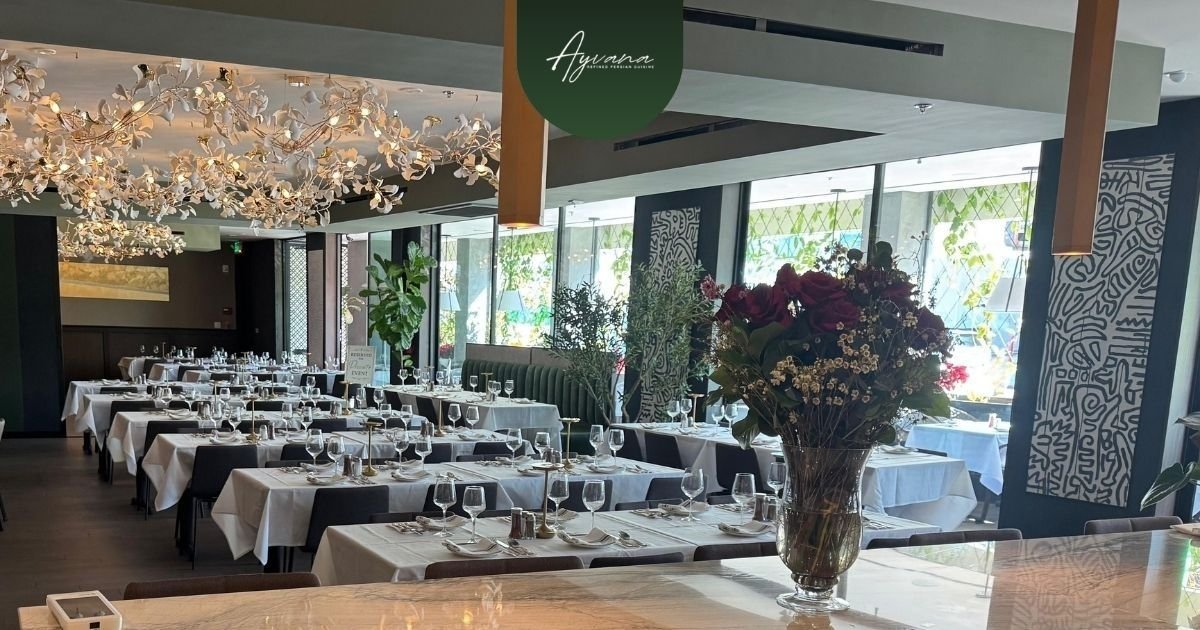
Persian private dining takes place in a reserved area of a restaurant designed for group gatherings and special occasions. Guests experience the restaurant’s atmosphere, on-site food service, and menu arrangements selected for the gathering.
The setting becomes part of the event itself, creating an environment where guests can relax, connect, and enjoy the occasion together.
Persian Catering
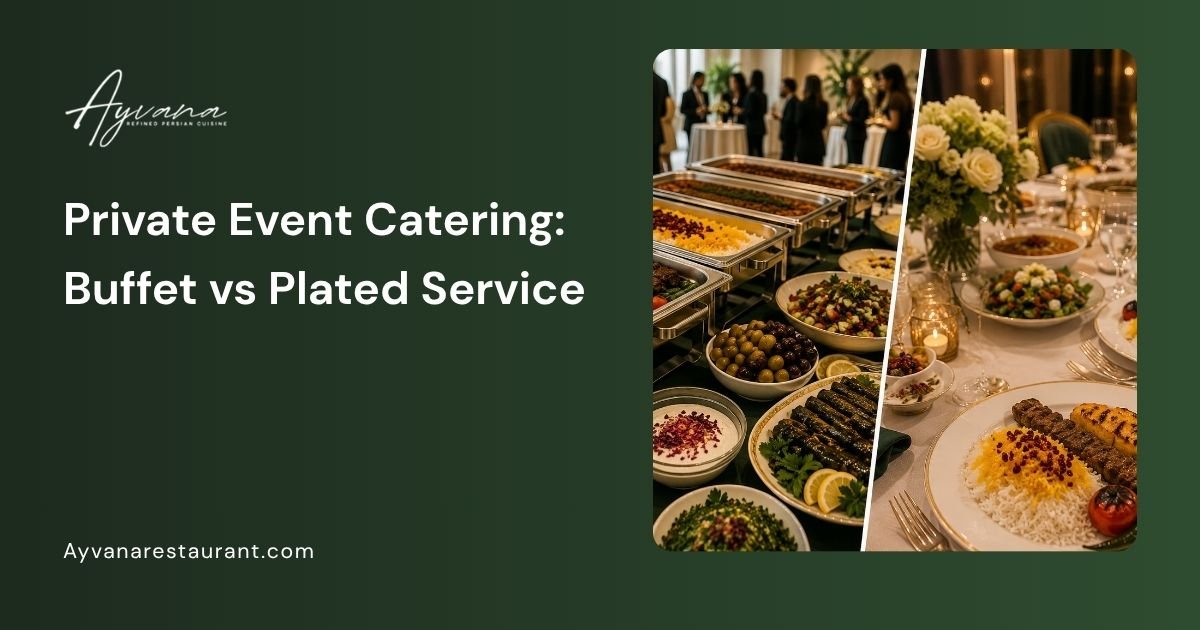
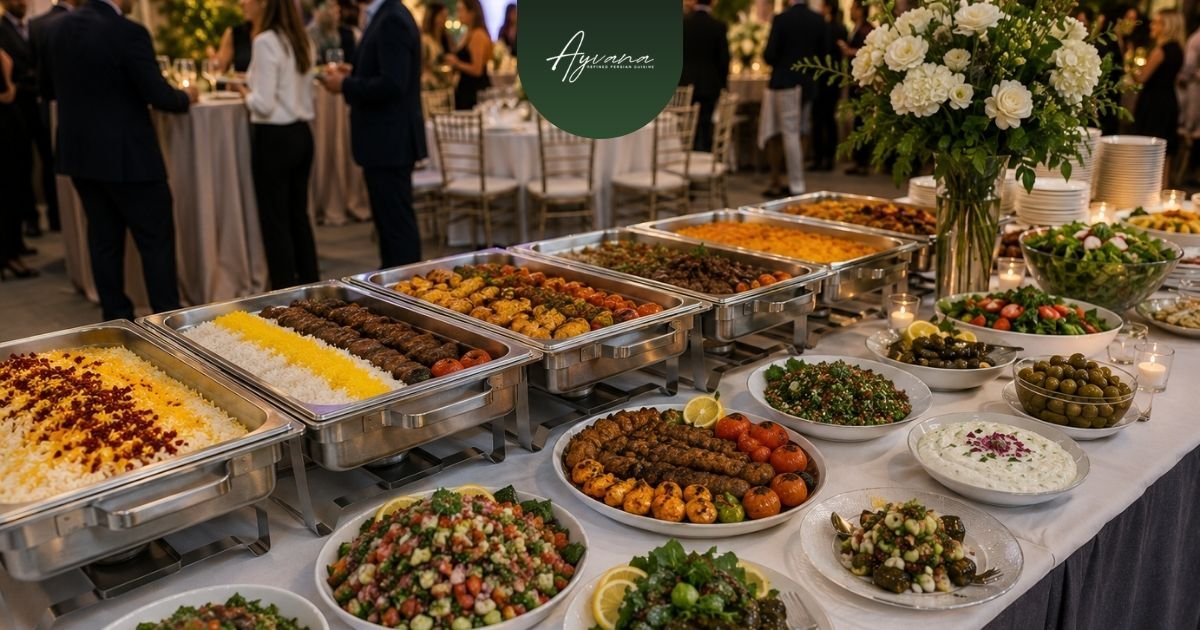
Persian catering brings food to an off-site location such as a home, office, event venue, or community space. Available delivery, pickup, setup, service, and menu arrangements may vary depending on the event details and catering package selected. This format offers greater flexibility for larger gatherings or events held outside a restaurant setting.
While the service styles differ, both private dining and catering are rooted in the same tradition of Persian hospitality. The goal is not simply to serve food, but to create a welcoming experience that brings people together around shared meals and meaningful celebrations.
The Biggest Differences Between Private Dining and Catering
The main differences between private dining and catering relate to where the event takes place, how service is handled, and how much planning remains with the host. The following factors explain how each option shapes the event experience.
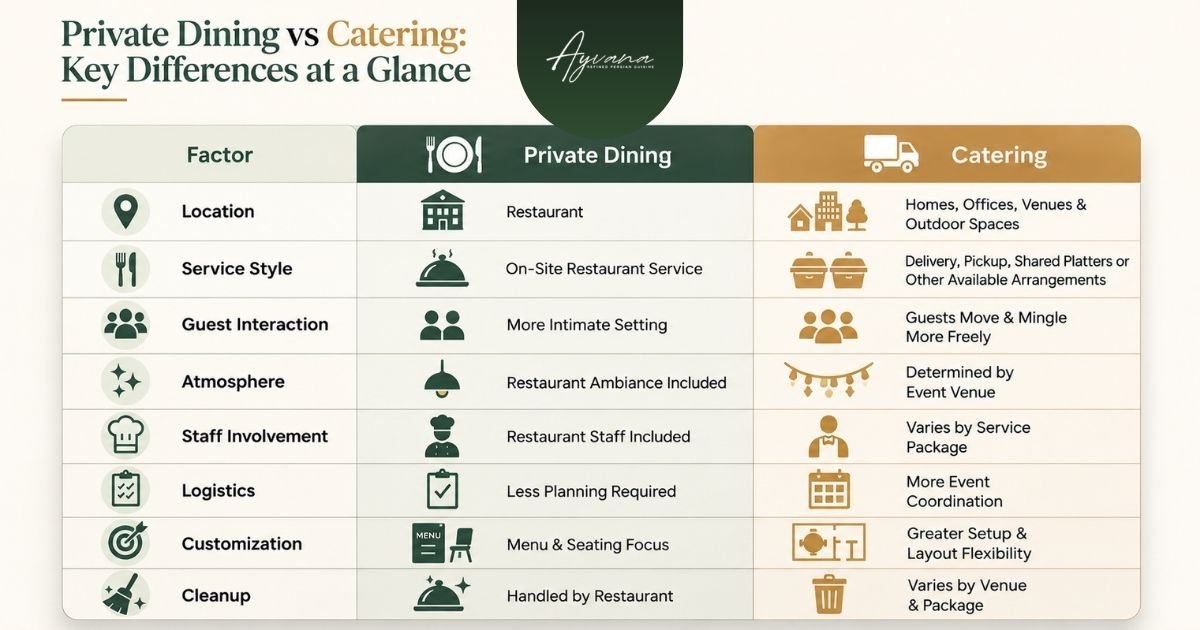
Location
Private dining takes place in a reserved private or semi-private restaurant area designed for group gatherings and special occasions.
Catering offers much greater flexibility, allowing events to be held at homes, offices, wedding venues, community centers, or outdoor spaces.
Service Style
Private dining typically includes full restaurant service, with meals prepared and served directly to guests. Catering arrangements may include delivery, pickup, shared platters, trays, or other service formats depending on the event details and options available.
Guest Interaction
The event format can influence how guests interact with one another. Private dining often creates a more intimate setting where guests remain together throughout the meal. Catering events, especially larger ones, may allow guests to move around the venue and socialize with different groups throughout the celebration.
Atmosphere
The restaurant environment becomes part of the event when choosing private dining. Lighting, décor, music, and table presentation all contribute to the experience. With catering, the atmosphere depends largely on the venue selected by the host and how the space is arranged.
Staff Involvement
Private dining generally includes on-site restaurant service. Catering support may range from pickup or delivery to more coordinated service arrangements, depending on what is available for the event.
Logistics
Private dining generally requires less planning because the venue, kitchen, service team, and dining setup are already in place. Catering often involves additional coordination related to venue access, setup, serving arrangements, equipment, and scheduling.
Customization
Both private dining and catering may offer menu flexibility, although available arrangements depend on the group size, event format, and service selected. Private dining typically focuses on selecting dishes, arranging seating, and tailoring the service experience within the restaurant setting.
Catering offers additional flexibility because the event itself can be adapted to the chosen venue. Hosts may have more control over the event layout, service style, timing, and overall setup.
Cleanup Responsibilities
One of the advantages of private dining is that the restaurant handles cleanup after the event. With catering, cleanup responsibilities vary depending on the service package and venue requirements, which may require additional planning by the host.
When Private Dining Is the Better Choice
Certain celebrations benefit from a dedicated restaurant setting where guests can enjoy attentive service, a welcoming atmosphere, and a more immersive dining experience. Here are some occasions where private dining is often the better fit.
Birthday Celebrations
Many birthday celebrations are centered around spending quality time with friends and family rather than managing event logistics. A private dining space allows everyone to gather in a dedicated setting while enjoying full restaurant service and professionally presented dishes.
The atmosphere helps make the occasion feel special without requiring the host to coordinate setup, serving, or cleanup.
Anniversary Dinners
Anniversaries are often more intimate than other celebrations, making the dining environment especially important. A private dining experience combines attentive service, comfortable surroundings, and a relaxed pace that allows guests to focus on conversation and the occasion being celebrated. Rather than simply sharing a meal, the restaurant atmosphere becomes part of the memory itself.
Corporate Client Meetings
Private dining provides a professional environment for meeting with clients, partners, or executive teams. The setting can support focused conversation away from many of the distractions associated with larger public spaces.
Small Wedding Events
For smaller weddings, rehearsal dinners, engagement celebrations, and post-ceremony gatherings, private dining can offer a balance of elegance and convenience.
The venue, service team, table settings, and food presentation are already in place, reducing the amount of planning required while still creating a refined and welcoming atmosphere for guests.
Family Reunions
Family reunions often bring together relatives who may not have seen one another for months or even years. In these situations, the ability to focus on reconnecting can be just as important as the meal itself.
A private dining setting encourages conversation and shared experiences while eliminating many of the responsibilities that typically fall on the host.
Instead of worrying about food service, seating arrangements, or cleanup, families can spend more time enjoying one another’s company in a comfortable and inviting environment.
When Catering Is the Better Choice
Some events require greater flexibility than a restaurant setting can provide. When guest counts increase, venue requirements become more specific, or the celebration is taking place at a unique location, catering often becomes the more practical solution. Here are some situations where catering may be the better choice.
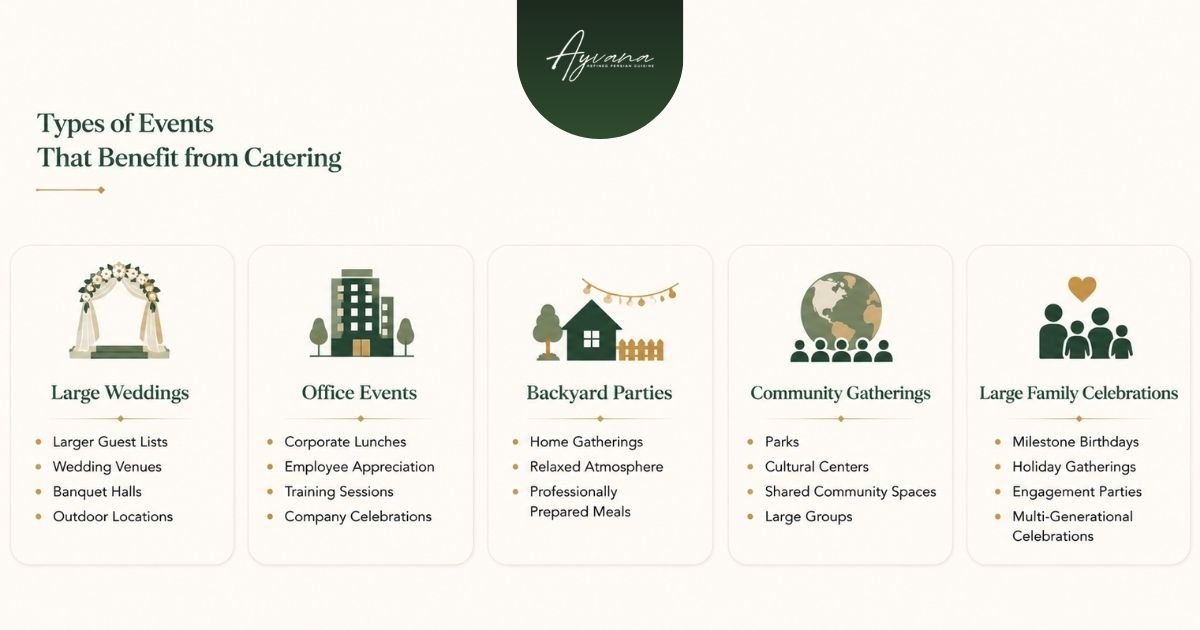
Large Weddings
Large weddings often involve guest lists that exceed the capacity of a private dining space. Catering allows couples to host their celebration at wedding venues, banquet halls, outdoor locations, or private properties while serving a menu arranged for the event.
It also provides the flexibility needed to accommodate larger groups and varied event schedules.
Office Events
Corporate lunches, employee appreciation events, training sessions, and company celebrations are often easier to organize with catering.
Food can be delivered directly to the workplace, allowing employees and guests to enjoy the event without leaving the office or interrupting the day’s schedule.
Backyard Parties
Hosting a gathering at home can create a relaxed and personal atmosphere, but preparing food for a large group can quickly become overwhelming. Catering allows hosts to enjoy their own event while providing guests with professionally prepared meals without the need for extensive cooking or serving responsibilities.
Community Gatherings
Community events often bring together large groups of people in parks, cultural centers, places of worship, and other shared spaces. Catering offers the scalability needed to serve many guests efficiently while adapting to the unique requirements of the venue and event format.
Large Family Celebrations
Milestone birthdays, holiday gatherings, engagement parties, and multi-generational family celebrations can involve dozens of guests. Catering provides the flexibility to host these events in a location that is convenient for family members while making it easier to serve larger groups.
Family-style platters, catering trays, and shared dishes also align naturally with the communal spirit of many Persian celebrations.
How Persian Hospitality Changes the Private Dining vs Catering Decision
When comparing private dining and catering, the decision is often about more than convenience, budget, or venue.
Persian hospitality adds another dimension to the conversation because the focus extends beyond serving food to creating an experience where guests feel welcomed, valued, and cared for.
At the heart of Persian hospitality is Mehman Navazi, a tradition that emphasizes generosity, warmth, and respect for guests. Whether an event takes place in a private dining room or at an off-site venue, many hosts prioritize creating an atmosphere where people can relax, connect, and enjoy each other’s company.
Several traditions help shape this experience:
- Guest-First Traditions: Guests are treated as honored members of the gathering, with attention given to their comfort and enjoyment throughout the event.
- Family-Style Sharing: Large platters, shared appetizers, and communal dining encourage conversation and create a sense of connection among guests.
- Food Abundance: Persian celebrations are often associated with generous portions and a variety of dishes, reflecting the belief that guests should feel welcomed and well cared for.
- Warm Hosting Culture: Hospitality is expressed through attentive service, personal interaction, and creating an environment where everyone feels included.
These traditions can shape either format. In private dining, they appear through attentive hosting, shared dishes, and the rhythm of a restaurant meal. In catering, they are reflected through generous menu variety, communal presentation, and food designed to bring guests together at the chosen venue.
Persian hospitality therefore does not determine which format is better. It strengthens whichever option best fits the occasion by keeping the focus on guest comfort, connection, and shared experience.
Which events work best for private dining vs catering?
The right format often depends on the event’s size, purpose, and location. The following examples show how those factors may affect the decision.
Private Dining vs Catering for Birthdays
Private dining often suits smaller birthday gatherings where the restaurant experience is part of the celebration. Catering may be more practical for larger parties held at home, outdoors, or in a rented venue.
Private Dining vs Catering for Corporate Events
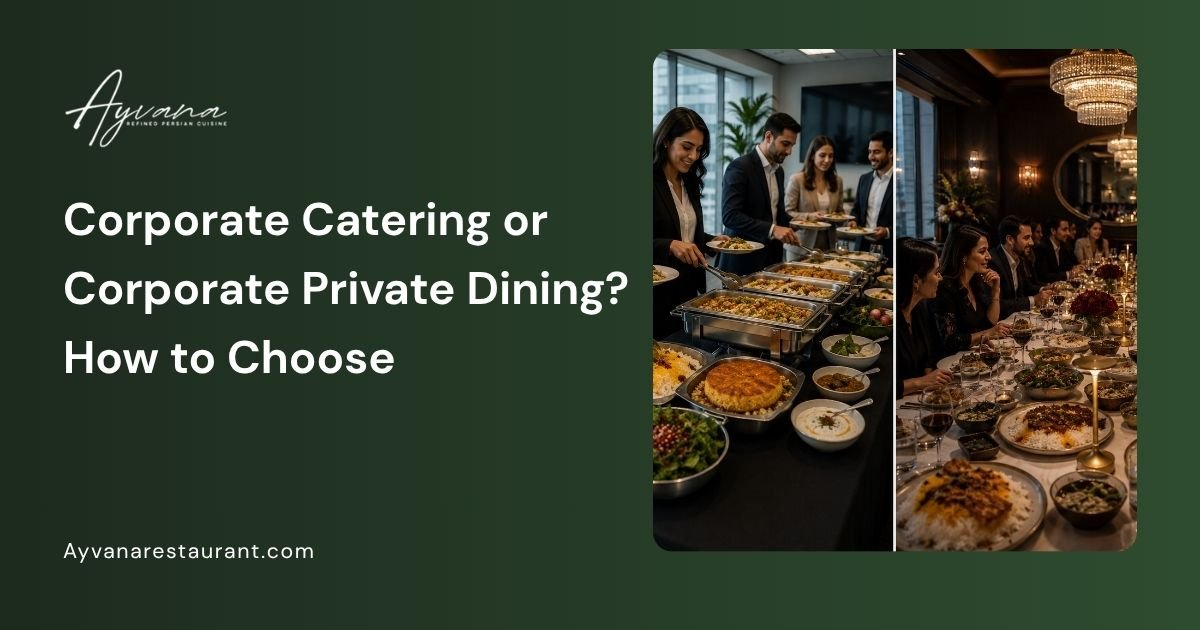
Private dining can work well for client meals, executive dinners, and smaller business gatherings where conversation and relationship-building are priorities. Catering is generally better suited to office lunches, training sessions, conferences, and larger internal events that need to remain on-site.
For a more detailed comparison, see our Corporate Catering vs Restaurant Corporate Private Dining guide.
Private Dining vs Catering for Weddings
Private dining may suit rehearsal dinners, engagement celebrations, and smaller wedding-related events. Larger weddings often require catering because the couple has already selected a separate venue and must serve a higher guest count.
Private Dining vs Catering for Family Gatherings
Private dining can reduce hosting responsibilities for smaller family celebrations. Catering may be the better fit for large reunions or multi-generational events held at a home, community space, or private venue.
Private Dining vs Catering for Holiday Parties
Private dining works well when the group wants a restaurant-based celebration with service included. Catering provides more location and scheduling flexibility for larger holiday events or gatherings held at an office or private venue.
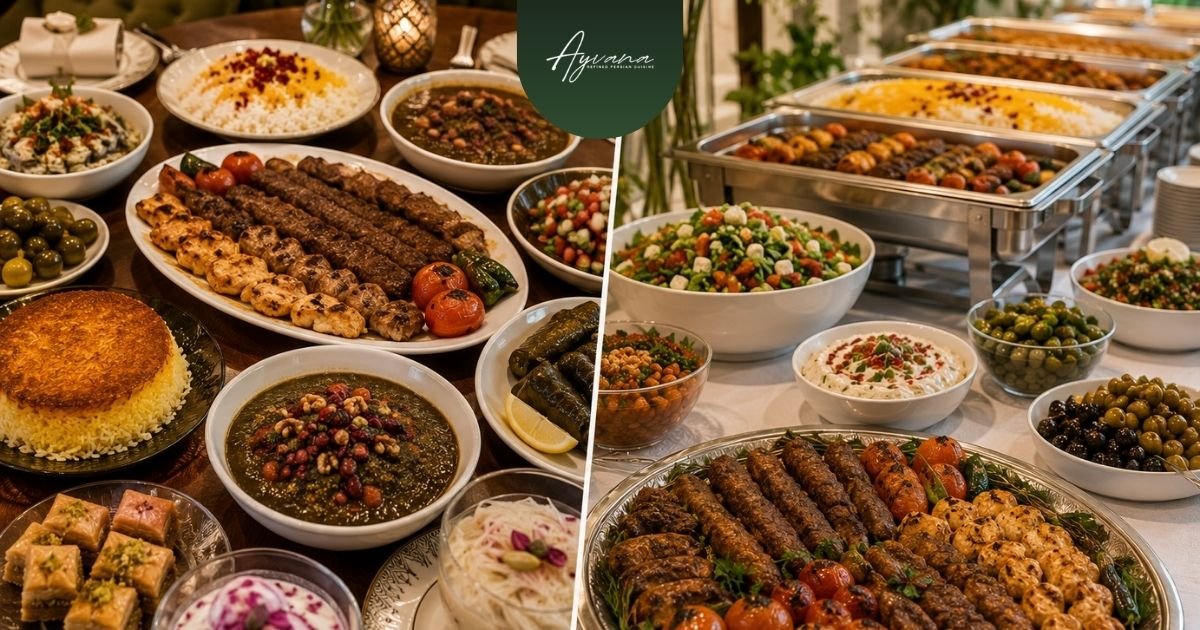
Food Experience: How Persian Cuisine Works in Both Private Dining and Catering
Persian cuisine adapts naturally to both private dining and catering. Many of the same dishes can be served in either format, but the presentation and dining experience often differ depending on the setting.
Best Persian Dishes for Private Dining
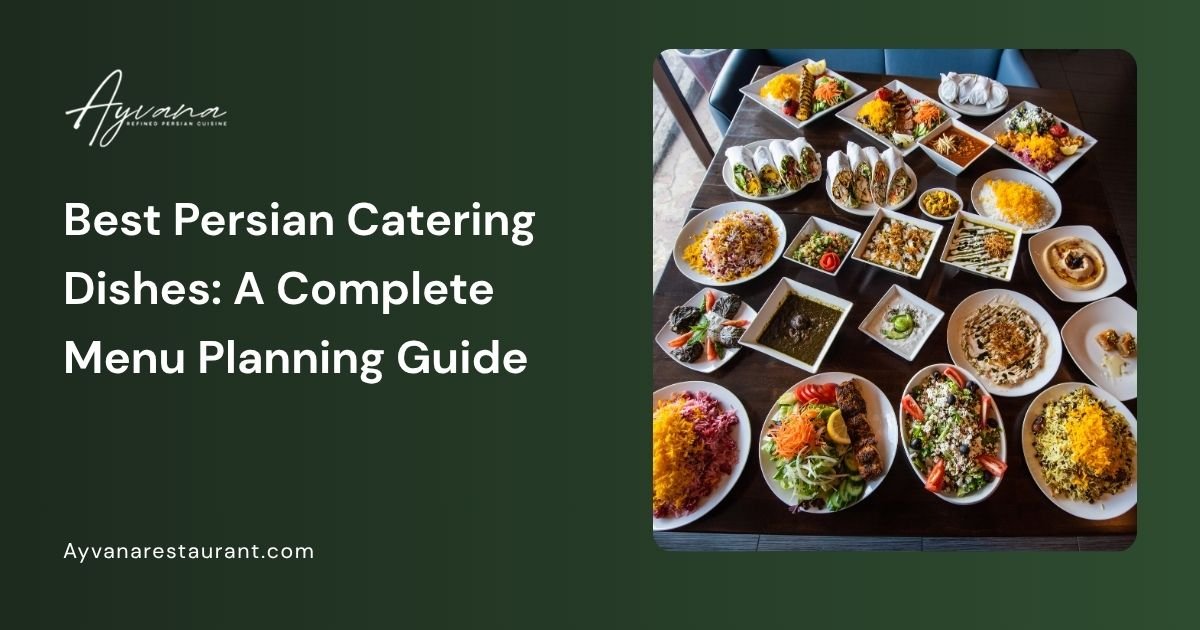
Private dining allows food presentation and on-site service to become part of the restaurant experience. Popular choices include:
Koobideh Kebab – Seasoned ground beef skewers grilled over an open flame and traditionally served with saffron rice.
Joojeh Kebab – Saffron-marinated chicken kebab known for its tender texture and bright flavor.
Soltani – A combination of Koobideh Kebab and Barg Kebab that offers variety in a single entrée.
Barg Kebab – Thinly sliced and marinated filet mignon grilled and served with Persian rice.
Ghormeh Sabzi – A traditional herb stew made with beef, kidney beans, and dried lime.
Fesenjan – A rich Persian stew made with walnuts and pomegranate sauce.
Tahdig – The crispy golden layer of rice that is often one of the most anticipated parts of a Persian meal.
Persian Appetizers – Dishes such as Kashk-e Bademjan, Mast-o-Khiar, and Dolmeh that are ideal for sharing before the main course.
Persian Desserts – Traditional sweets such as Baklava, Bastani Sonnati, and Zoolbia that provide a memorable ending to the meal.
In a private dining setting, restaurant-style presentation and on-site service become part of the overall experience, with arrangements depending on the selected menu and event format.
Best Persian Dishes for Catering
Many Persian dishes are well-suited for larger catered events because they maintain their quality while being served to groups. Popular catering selections often include:
- Koobideh Kebab
- Joojeh Kebab
- Soltani
- Ghormeh Sabzi
- Tahdig
- Appetizer Platters
- Persian Dessert Trays
These dishes work well in shared-platter, catering-tray, and other available group-serving formats, making them practical choices for weddings, corporate events, family gatherings, and community celebrations.
Their variety also allows hosts to accommodate different tastes while creating the abundance and shared dining experience that are often associated with Persian hospitality.
Catered events may use shared platters, serving trays, or other arrangements suited to the venue and guest count.
This approach combines efficiency with the communal spirit that makes Persian cuisine especially well-suited for group events.
How Ayvana Persian Restaurant Offers Both Private Dining and Catering in Tarzana
Ayvana Persian Restaurant offers both private dining and catering services for a variety of events throughout Tarzana. Whether you’re planning a business gathering, family celebration, birthday party, or anniversary dinner, guests can choose the format that best suits their needs.
Private dining provides a dedicated restaurant setting with attentive service, while catering brings authentic Persian cuisine directly to homes, offices, and event venues. Available menu and event arrangements may vary based on guest count, preferences, and the format of the gathering.
Ayvana’s private dining and catering options may be suitable for:
- Business Events and Corporate Gatherings
- Birthday Celebrations
- Family Reunions
- Anniversary Dinners
- Holiday Parties
- Wedding-Related Events
No matter the format, the focus remains on quality food, thoughtful service, and the tradition of Persian hospitality that helps create memorable gatherings.
Private Dining vs Catering Cost Considerations
The cost of private dining and catering can vary significantly depending on the type of event. Rather than one option always being less expensive than the other, pricing is typically influenced by several factors related to the guest experience and event requirements.
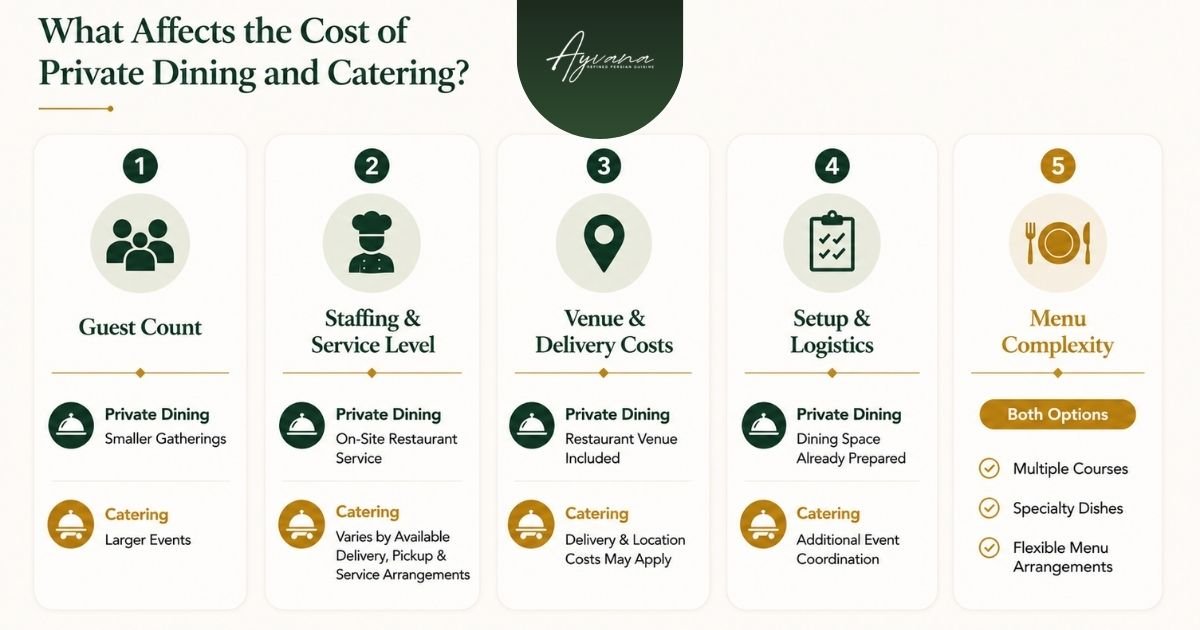
Guest Count
The number of guests is often one of the biggest cost factors. Smaller gatherings may fit comfortably within a private dining setting, while larger events may benefit from the scalability of catering services.
Staffing and Service Level
Private dining generally includes restaurant staff as part of the experience. For catered events, costs may vary depending on the available delivery, pickup, setup, and service arrangements selected.
Venue and Delivery Costs
Private dining includes the restaurant venue as part of the event experience. Catering may involve delivery fees, transportation costs, or venue-related expenses depending on the location and event setup.
Setup and Logistics
Catering may require additional coordination related to venue access, food placement, timing, and any setup responsibilities associated with the selected arrangement. Private dining typically reduces these logistical requirements because the restaurant environment is already prepared for guests.
Menu Complexity
Persian menu selections can also influence overall costs. Events featuring multiple courses, specialty dishes, extensive appetizer selections, or customized menus may require additional preparation regardless of whether the event is hosted in a private dining room or through catering services.
Ultimately, the best value depends on the type of event, the desired level of service, and the overall experience you want to create for your guests.
How to Choose Between Private Dining and Catering
Start with the role you want the meal to play in the event.
Choose private dining when the restaurant setting, on-site service, and shared dining experience are central to the occasion.
Choose catering when the venue has already been selected, the guest count exceeds the restaurant’s capacity, or location flexibility is the main priority.
A simple framework is:
Need a hosted restaurant experience?
→ Private dining
Need food brought to your chosen venue?
→ Catering
Need additional service at an off-site event?
→ Ask which catering arrangements are available
The best choice is the one that fits the event’s purpose, guest count, venue, and desired level of host involvement.
Finding the Right Event Experience With Ayvana Persian Restaurant
Private dining and catering create different kinds of events. Private dining places the restaurant atmosphere and hosted meal at the center of the occasion, while catering brings Persian cuisine to a venue selected by the host.
Ayvana Persian Restaurant offers both options for business events, family celebrations, birthdays, weddings, and other gatherings in Tarzana. Explore the private dining and catering services, browse the Persian menu, or contact the team to discuss which format best suits your event.